GOT HERE Array ( [strictly_necessary] => Array ( ) [functional] => Array ( ) [performance_analytics] => Array ( [0] => Array ( [0] => Kuzsu [1] => [2] => ) ) [advertisement_targeting] => Array ( ) ) Vibratory Sheet Pile Driving Solutions: Ivor King - The Piling People Skip to content

Scroll to continue

piling solutions

Key Benefits & Advantages


Fast and economical solution most suited to loose or cohesionless soil conditions

Capable of reducing noise and vibration output

Single or double hammer size options available, adaptable to suit the size of rig and/or any site restrictions

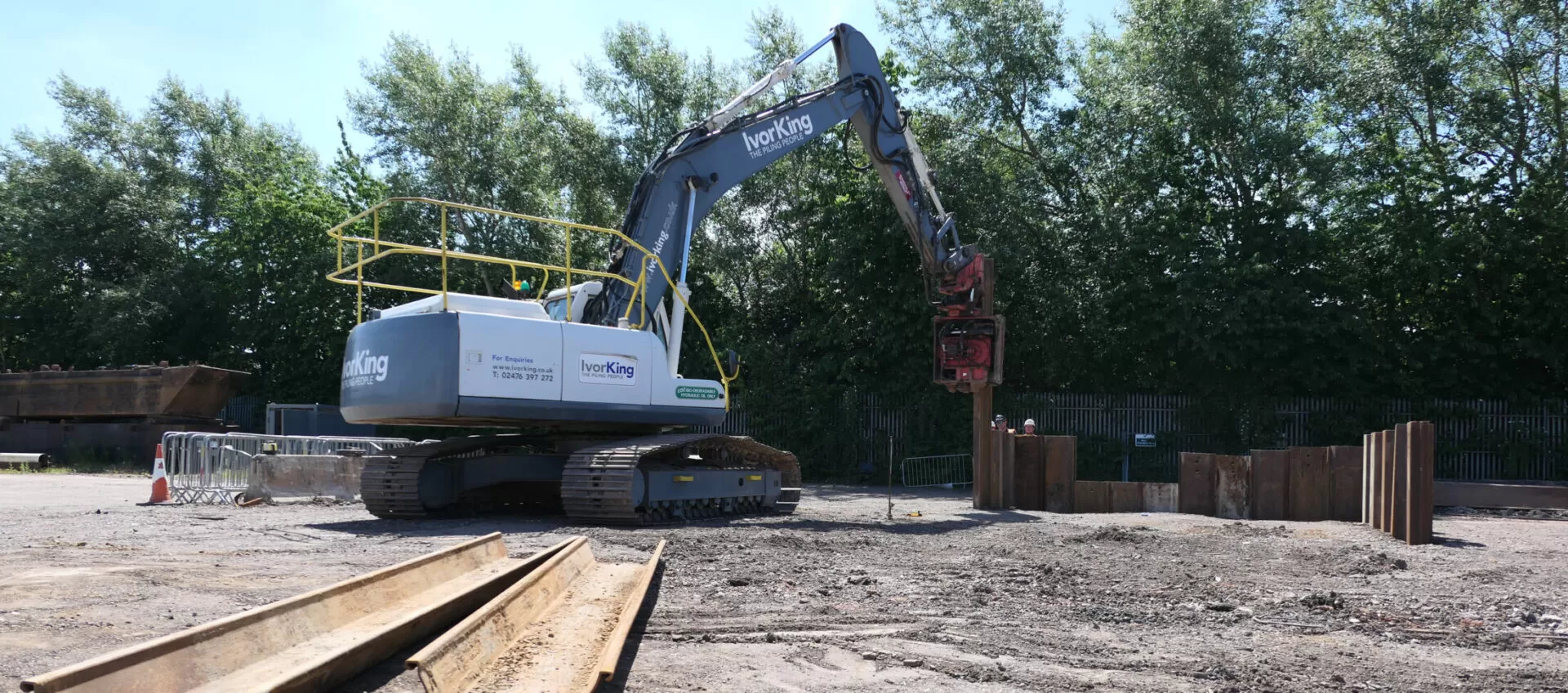
Adaptable for use with small excavators

Can be efficiently used to extract sheet piles

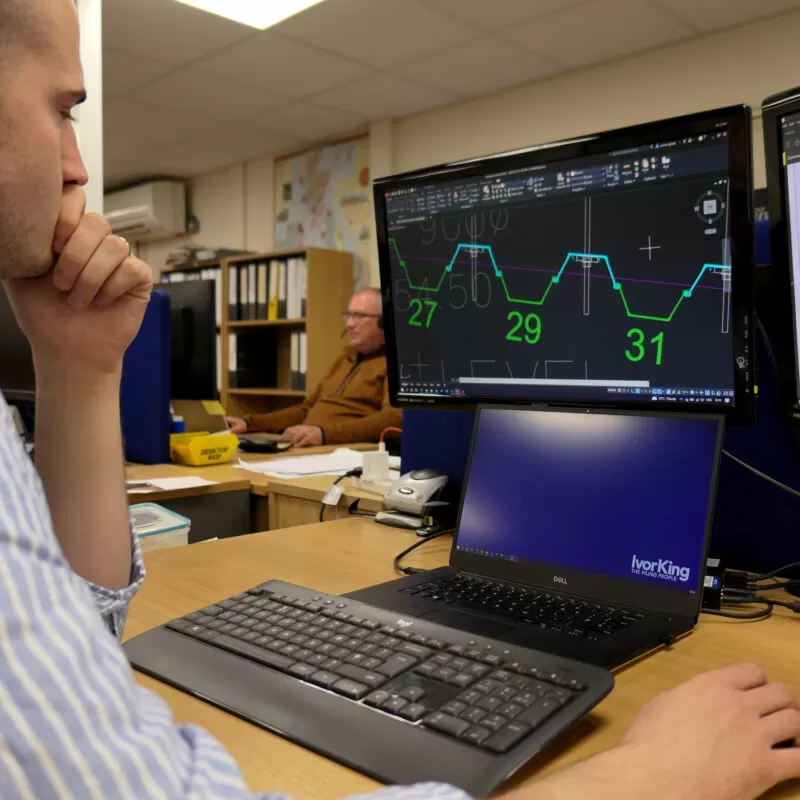
Digital reporting to monitor sheet pile installation

Vibratory Driving Solutions

This is a particularly fast and economical method of sheet pile installation with a wide range of vibratory hammers available for a variety of base machines. Loose to medium dense cohesionless soils provide the best ground for vibro-driving. Whilst vibration and noise will occur, this can be kept to a minimum with the correct choice of vibratory hammer. When site conditions stipulate that a vibrationless method of installation is required, Ivor King can offer a range of virtually silent, vibration-free installation methods.

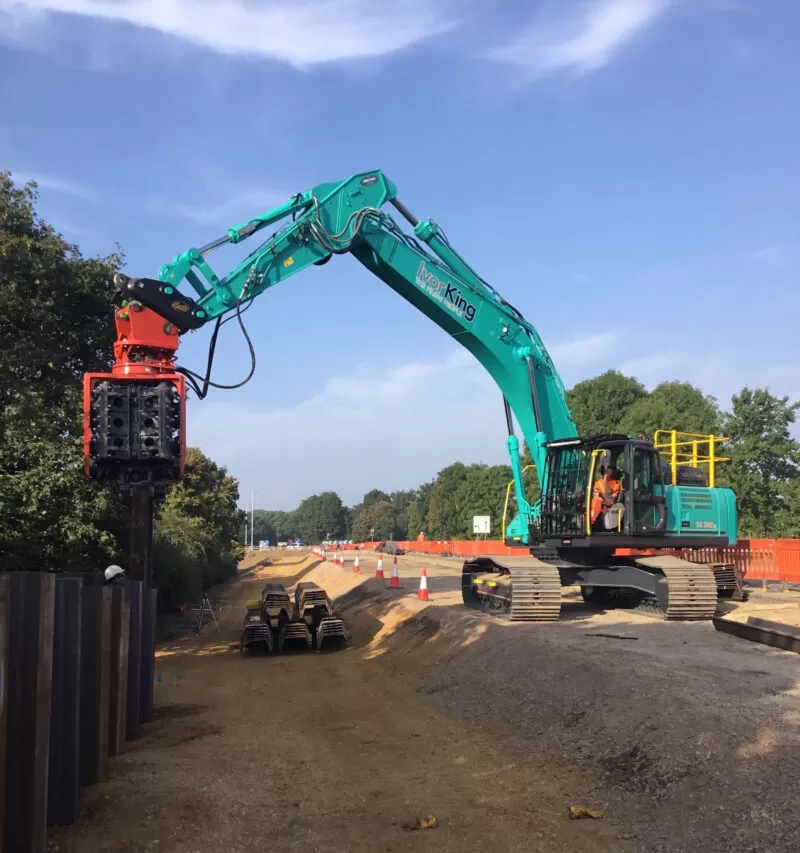
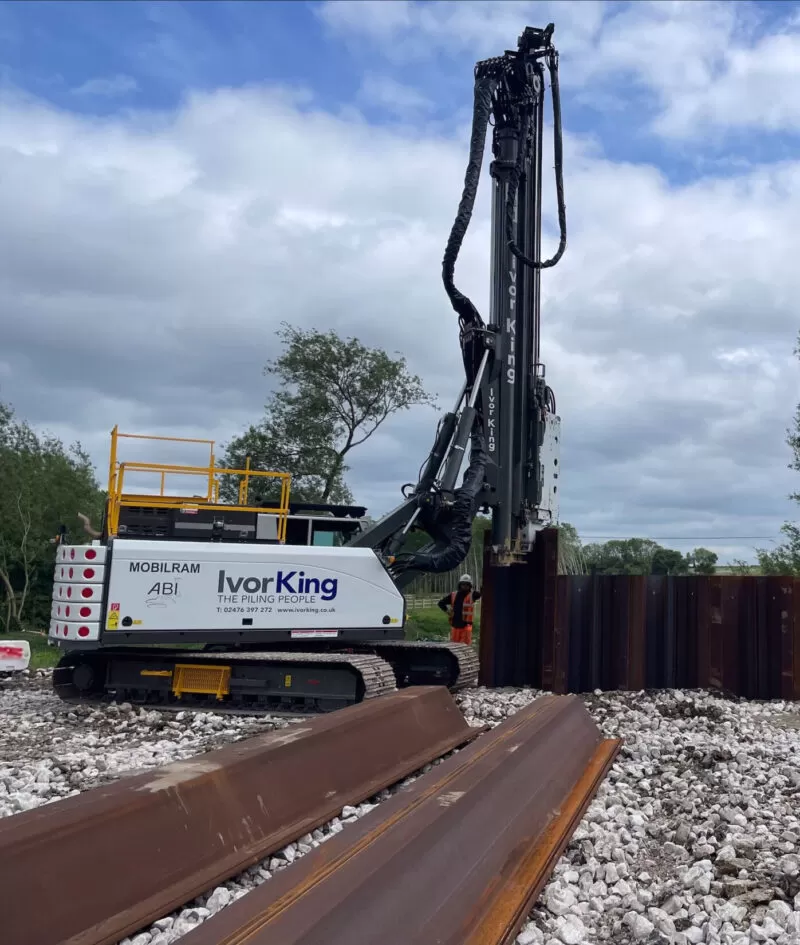
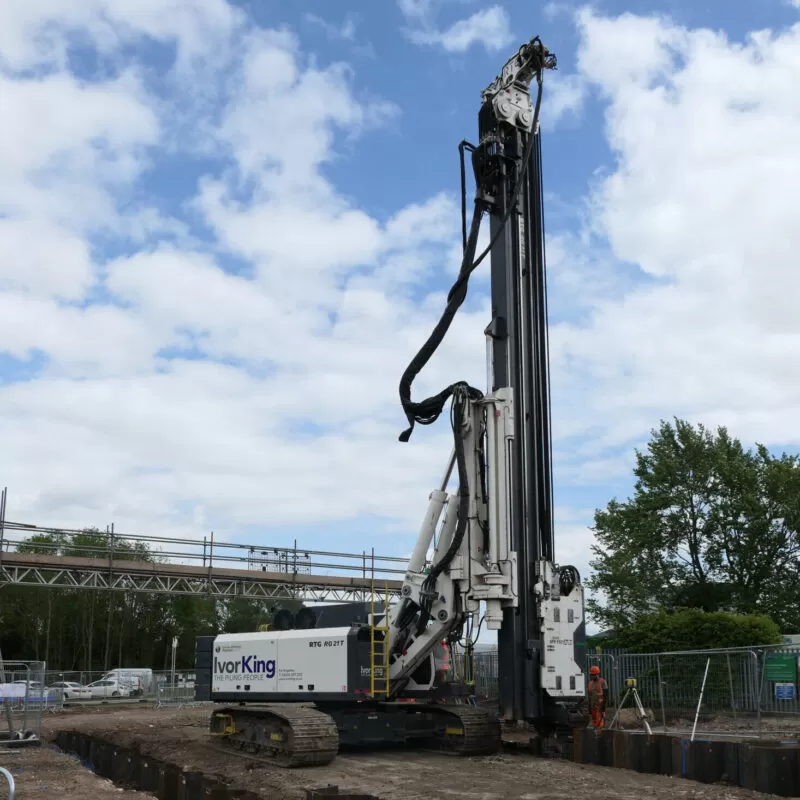
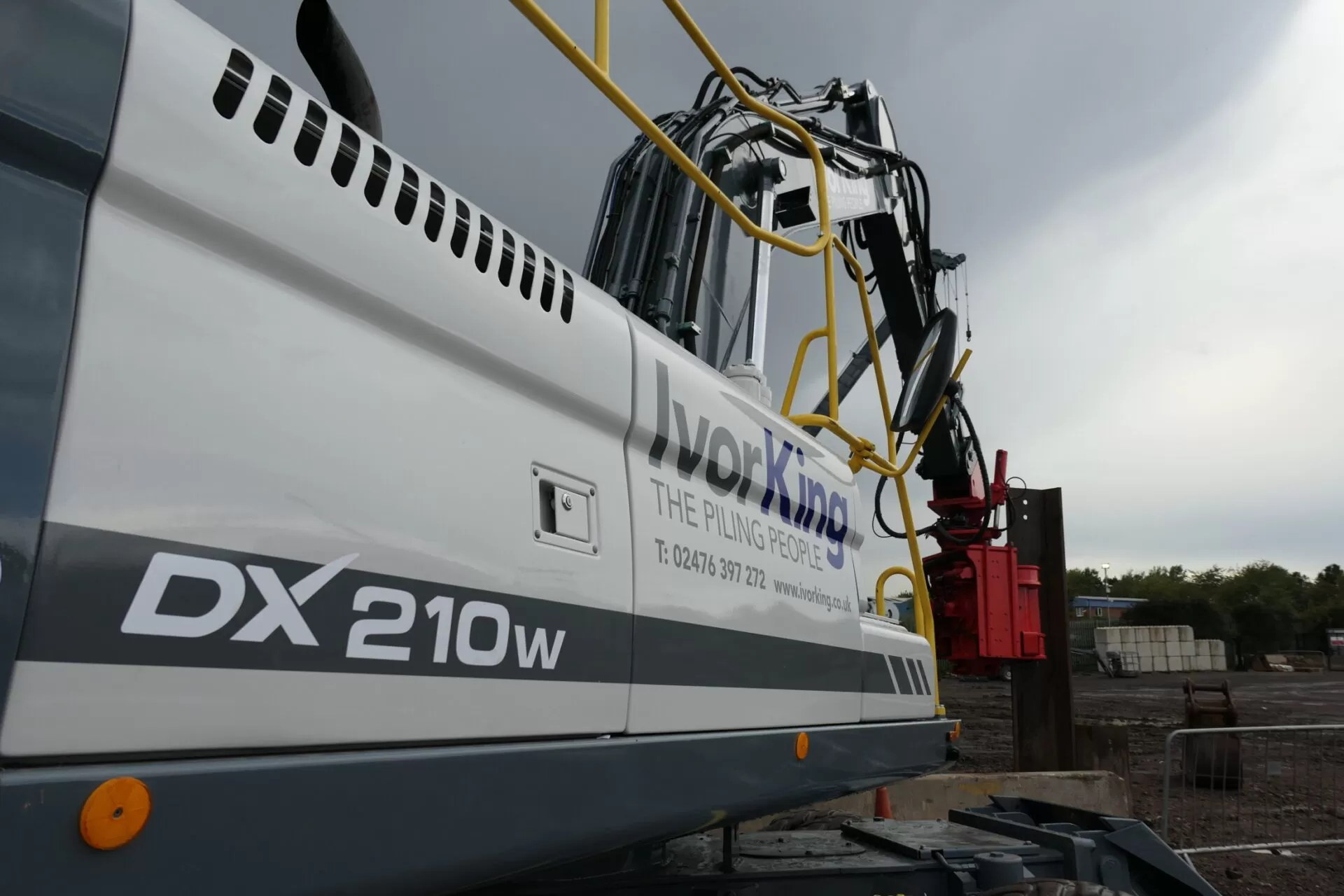
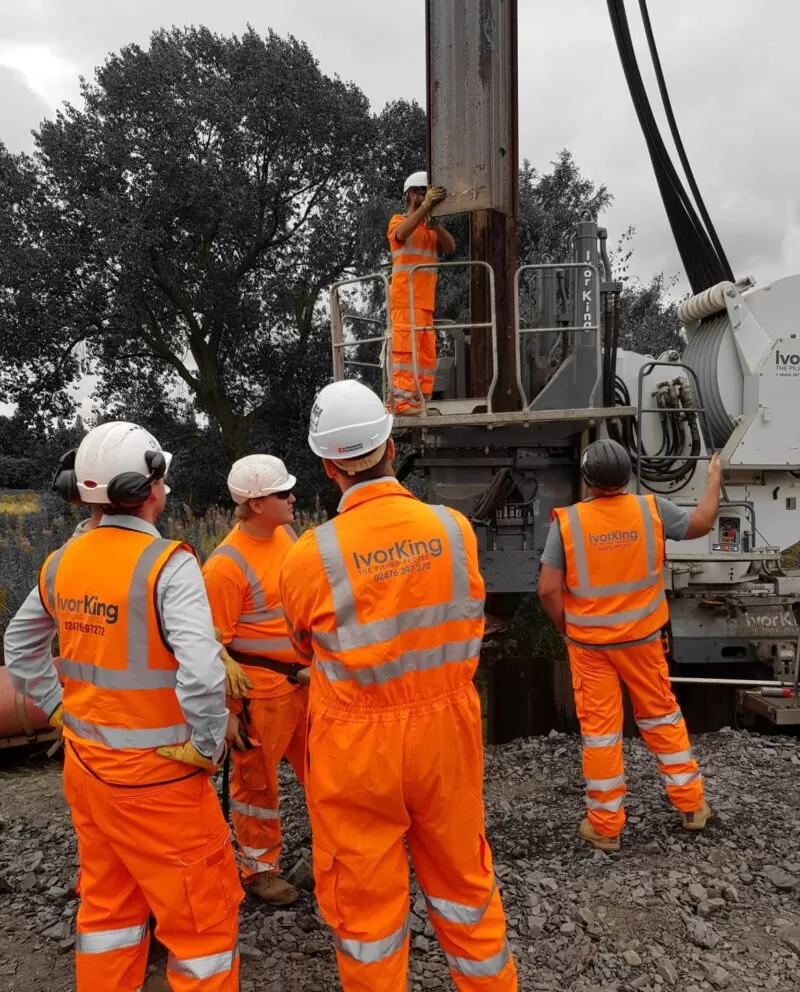
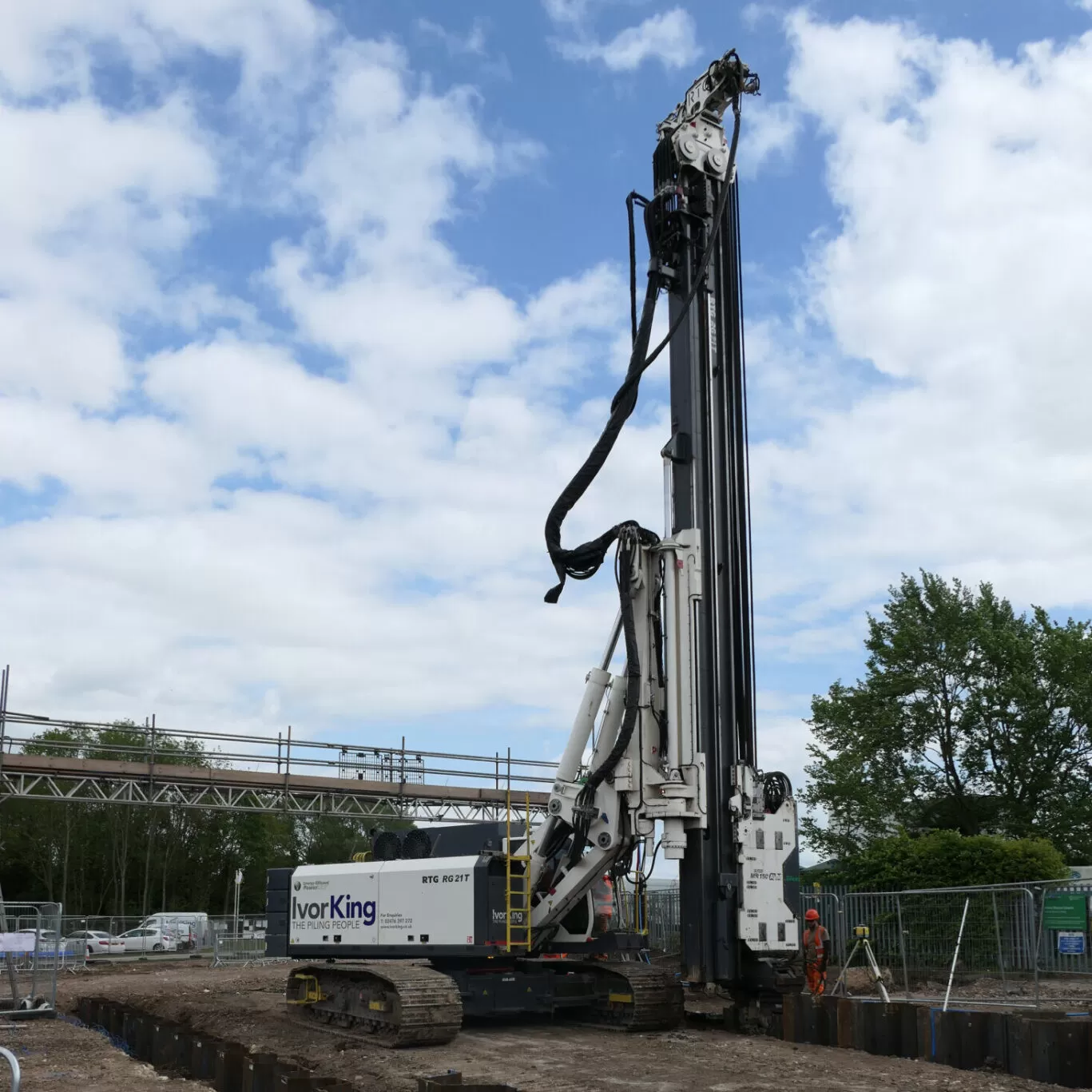
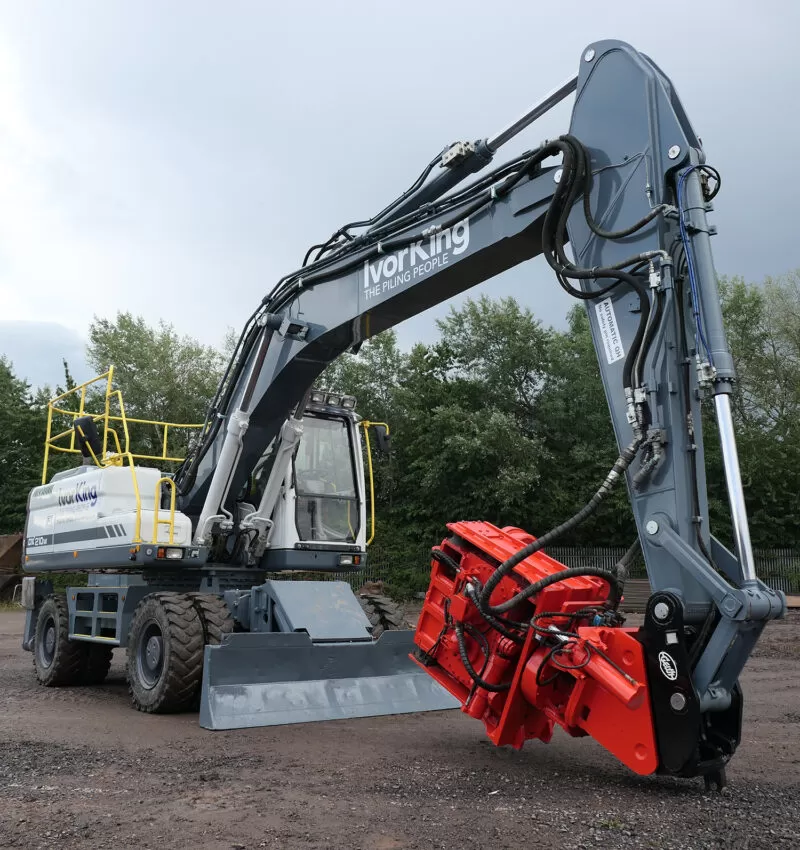
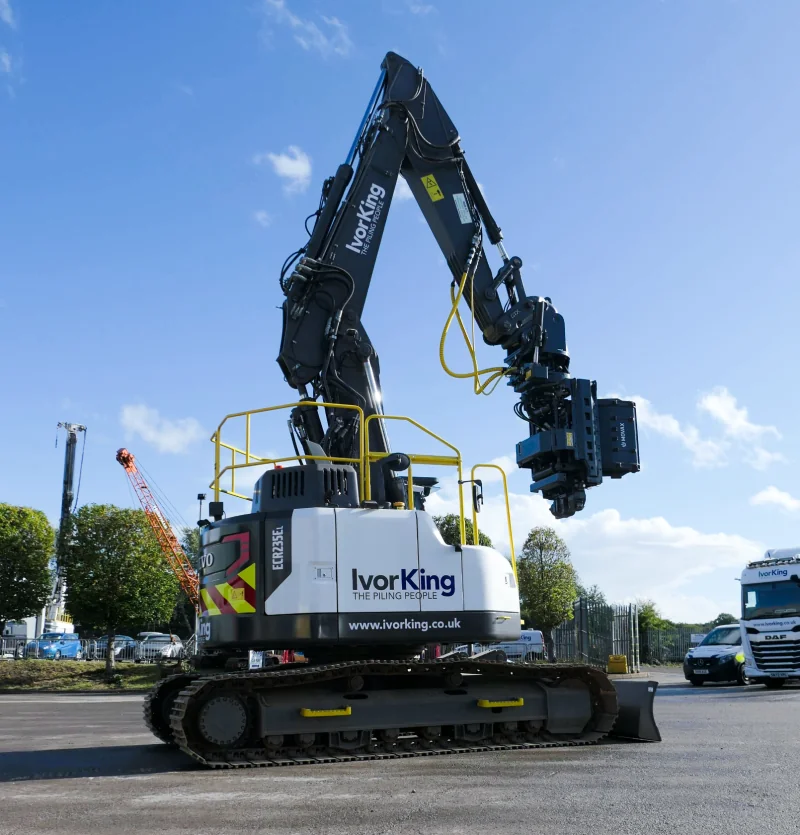
Ivor King utilise three main types of vibro-hammers operated in conjunction with three different types of plant:

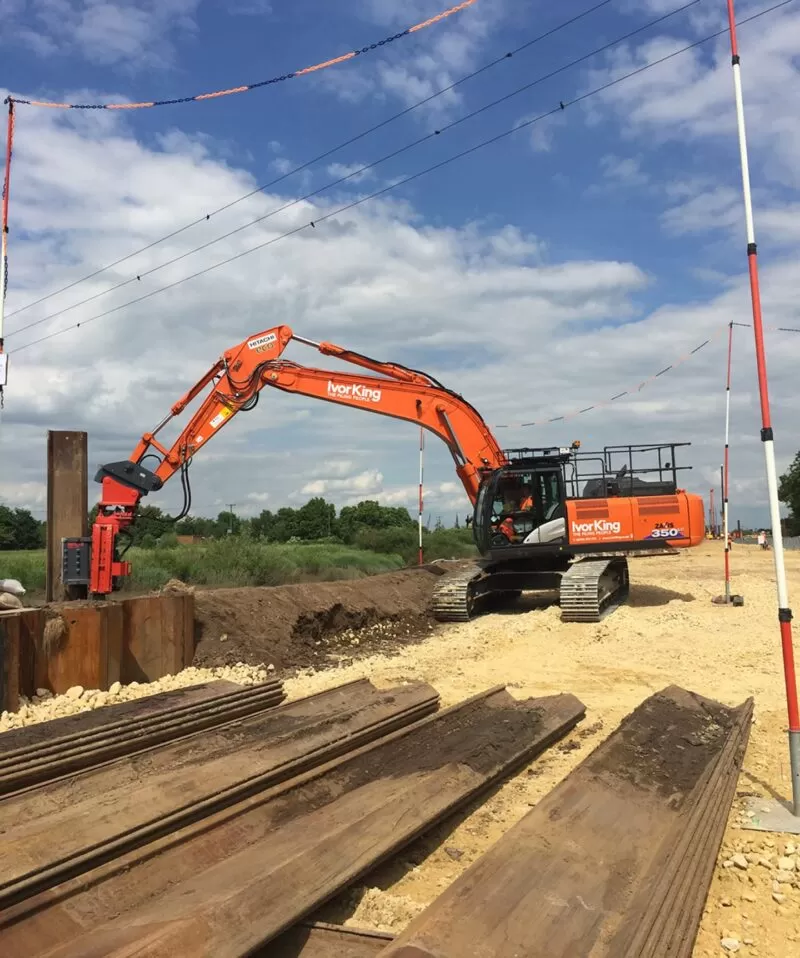
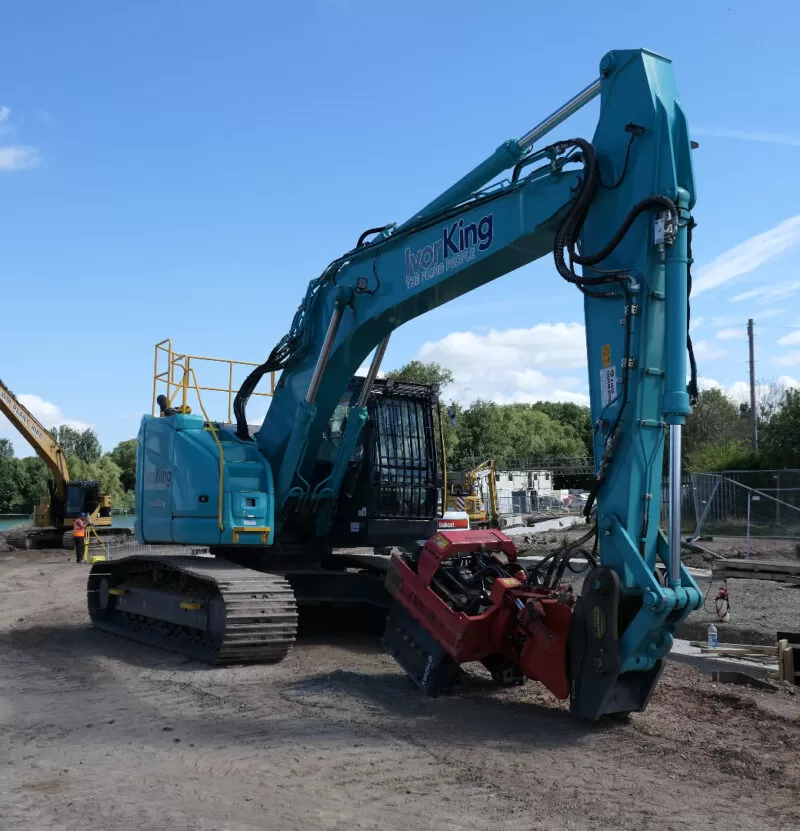
  • Excavators with Movax Vibratory Hammer Attachments
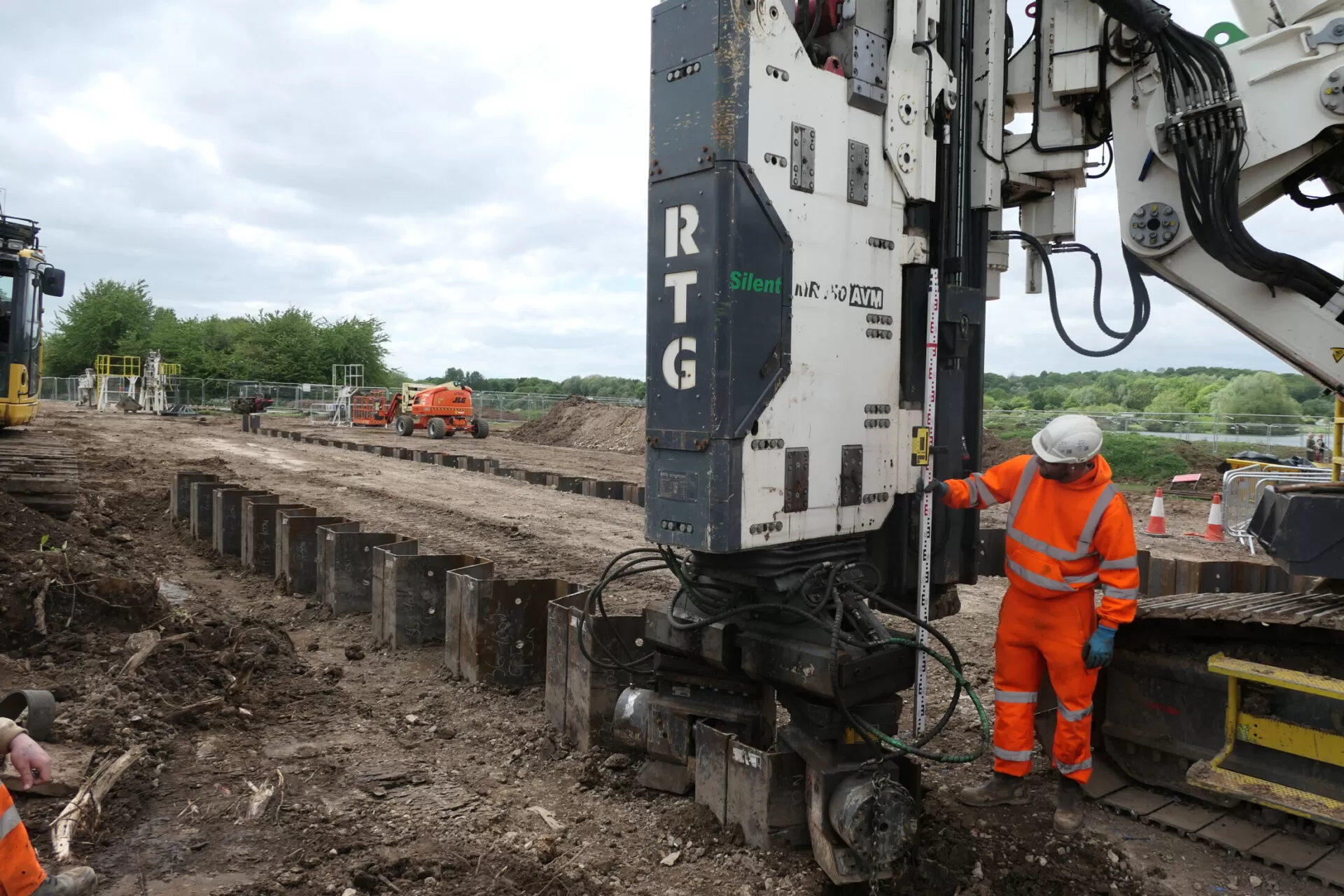
  • Telescopic Leader Rigs with Vibratory Hammer Attachments
  • Crawler Cranes with Suspended Vibro-Hammers

Ground Conditions and use of Vibratory Hammers

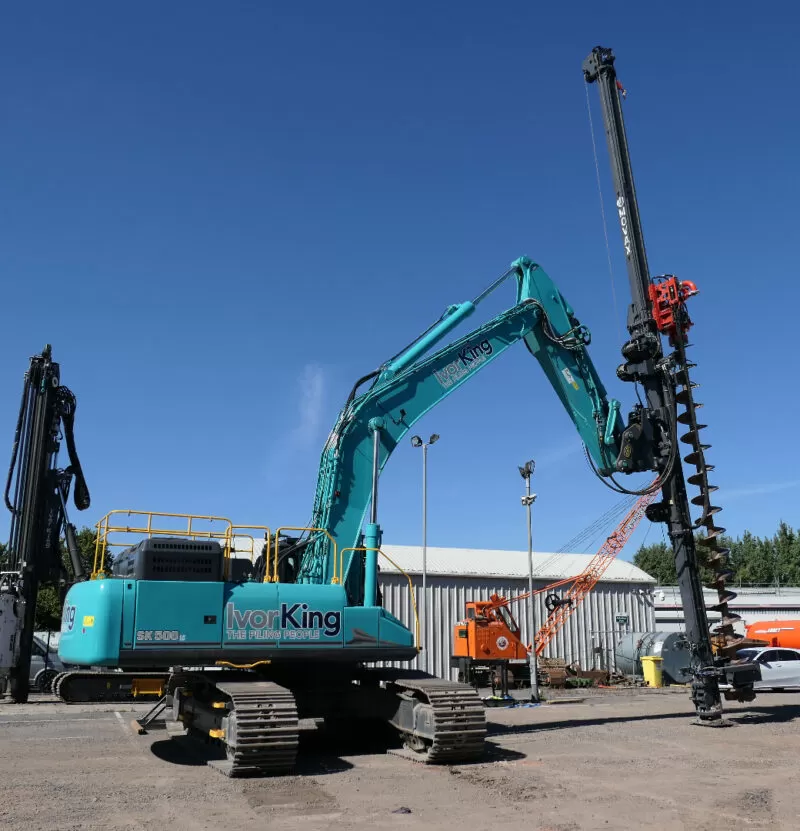
The soils best suited to vibration work are non-cohesive soils, i.e. gravel or sand, provided that the soils are not too dense. In cases where SPT (Standard Penetration Test) N-values of over 50 are present, vibro-driving will be difficult. Pre-augering prior to vibro-driving piles and water jetting whilst vibro-driving piles can be utilised to loosen dense soil. Vibratory hammers operating at higher amplitudes are normally effective in more difficult soils.

Clay soils have a dampening effect and reduce the effectiveness of the energy transferred to the pile. Vibratory driving is therefore difficult where firm or stiff clay soils are encountered. High amplitude hammers are likely to yield the best results in such conditions. Should the vibratory hammer reach a refusal rate of less than 75mm of pile penetration per minute, Impact Driving can be used to progress the piles further.

Our ‘variable moment’ vibration hammers can be operated at various settings to suit different pile and ground conditions and can also be fitted with digital recording devices to help monitor sheet pile installation.

Integrated Height & Slew Restrictors for added built-in safety

For occasions where working in confined spaces, such as under road or rail bridges is unavoidable, we can deploy excavators fitted with an integrated safety system which physically limits a machine’s movement in terms of both height and slew. Pre-defined safe working zones are entered into the system which in-turn restricts a machine’s movements should it approach these limits, building in extra safety in such circumstances.

Vibration Monitoring

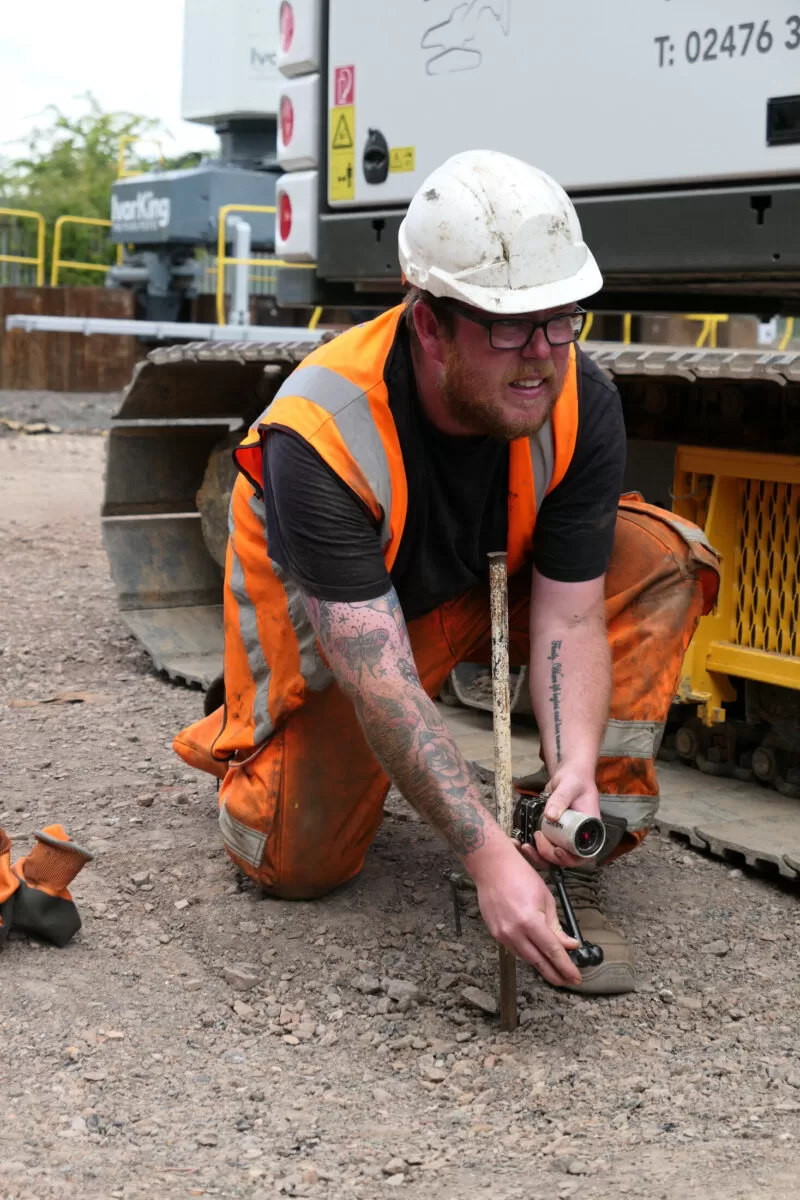
Where the method of piling installation causes vibration, monitoring of vibration levels to adjacent properties may be necessary, operating within the guidance set out in BS 5228-2:2009 + A1:2014 and BS 7385-2:1993.

Seismic monitoring allows us to keep within any pre-defined vibration limits, which in turn ensures that peak measurements caused by piling activity are not likely to lead to surrounding building damage. Where readings exceed any pre-defined vibration thresholds, alternative pile installation methods may need to be considered.

Using the monitor’s built-in modem, results can be viewed and captured in real time via a remote desktop computer, or downloaded remotely following piling activity. Conversely, results can be reviewed at site directly via the machine’s display and downloaded on to a USB device.
Plant & Equipment Our Vibratory Sheet Piling Equipment & Rig Specification Guide

Plant & Equipment to Hire See our extensive range of equipment available for hire

Get in touch to discuss your requirements and we’ll be happy to recommend what you’ll need to get the job done, all at competitive prices.
Piling Solutions
Movax Training News Banner

Which ground conditions suit vibratory sheet pile driving? caret-down

Vibratory driving is particularly suited to loose to medium dense sands and gravels. Dense ground and firm or stiff clay can make installation more difficult, so the ground investigation needs to be reviewed alongside the pile section and required depth. Ivor King uses this information to choose the hammer and assess whether another installation method would be more suitable.

Does vibratory sheet piling create noise and vibration? caret-down

Yes. Vibratory hammers generate noise and vibration during installation, although the choice of hammer and its settings can help reduce the effects. Nearby buildings and any project limits need to be considered when selecting the method. Where vibration must be avoided, hydraulic press-in piling may be a more appropriate option, subject to the ground conditions and site requirements.

Can vibratory piling be used on restricted-access sites? caret-down

Vibratory equipment can be mounted on excavators, telescopic leader rigs or suspended from crawler cranes. This gives options for different pile sizes and working spaces, including smaller excavator-mounted systems. Where height or movement is restricted, Ivor King can use excavators with integrated height and slew restrictors. Access, headroom, pile handling and the working area still need to be assessed before choosing the equipment.

What happens if a vibratory hammer cannot drive the piles to depth? caret-down

If ground resistance prevents further progress, the installation method needs to be reassessed. Depending on the ground conditions and project requirements, options can include a different hammer setting, pre-augering or impact driving to complete penetration. These measures must be considered against the pile design and site constraints; they are not suitable for every project.

Can vibratory hammers extract temporary sheet piles? caret-down

Yes. Vibratory hammers can be used to extract sheet piles after temporary works are complete. Whether extraction is appropriate depends on the pile condition, ground conditions and the effect of removal on nearby structures or retained ground. The removal sequence and any project requirements for the voids left by the piles should be considered as part of the temporary works plan.

How are vibration levels monitored near neighbouring buildings? caret-down

Where required, seismic monitors measure vibration at agreed locations near neighbouring properties. Readings can be reviewed on site or remotely against the project’s predefined limits. If a threshold is exceeded, the team can review the piling activity and consider changes to the working method or an alternative installation technique. Monitoring requirements should be agreed before piling starts.