GOT HERE Array ( [strictly_necessary] => Array ( ) [functional] => Array ( ) [performance_analytics] => Array ( [0] => Array ( [0] => Kuzsu [1] => [2] => ) ) [advertisement_targeting] => Array ( ) ) Sheet Pile Retaining Walls | Ivor King - The Piling People Skip to content

Scroll to continue

Sheet Pile Retaining Wall

Key Benefits & Advantages


Can be used in a variety of engineering applications

Highly durable with a long service life of up to 120 years

Reduced programme times over other traditional retaining solutions

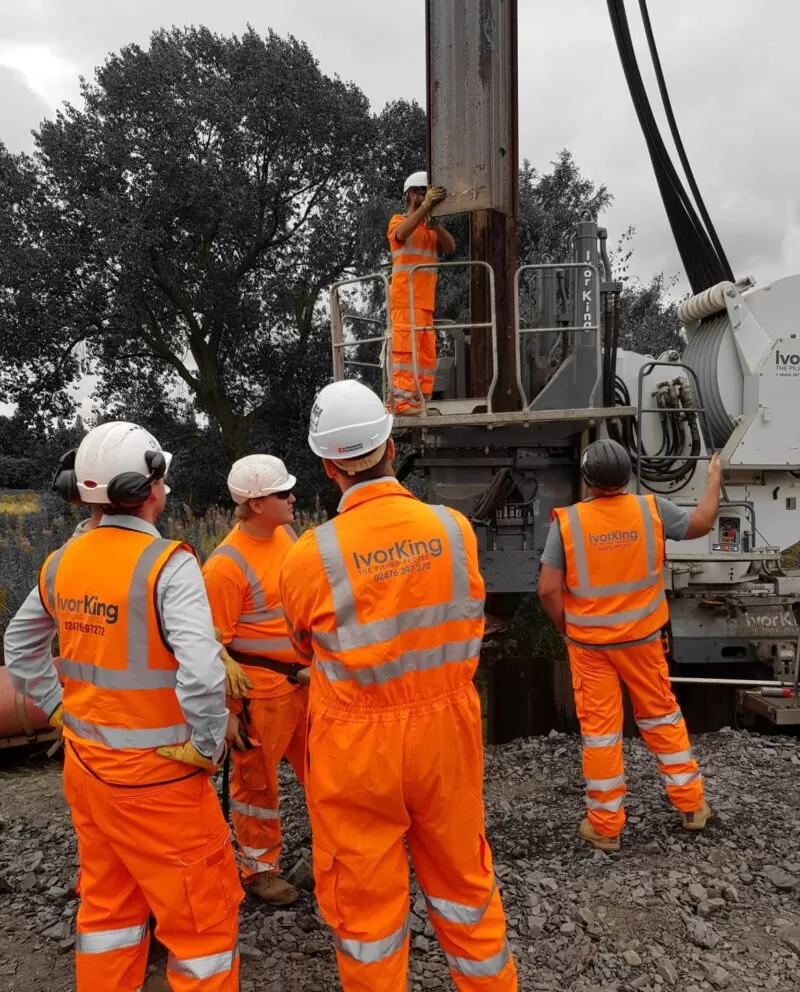
A range of installation methods and techniques available, including vibration-free

Can form a watertight structure

Reinforced concrete or steel capping beams (fabricated by Ivor King) can be added to the installation.

Can be painted or clad in a range of materials to improve aesthetics

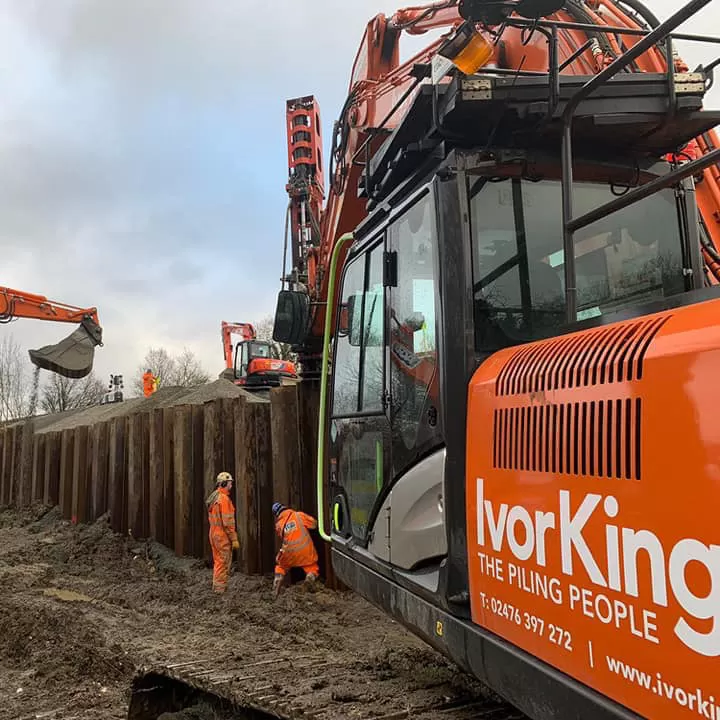
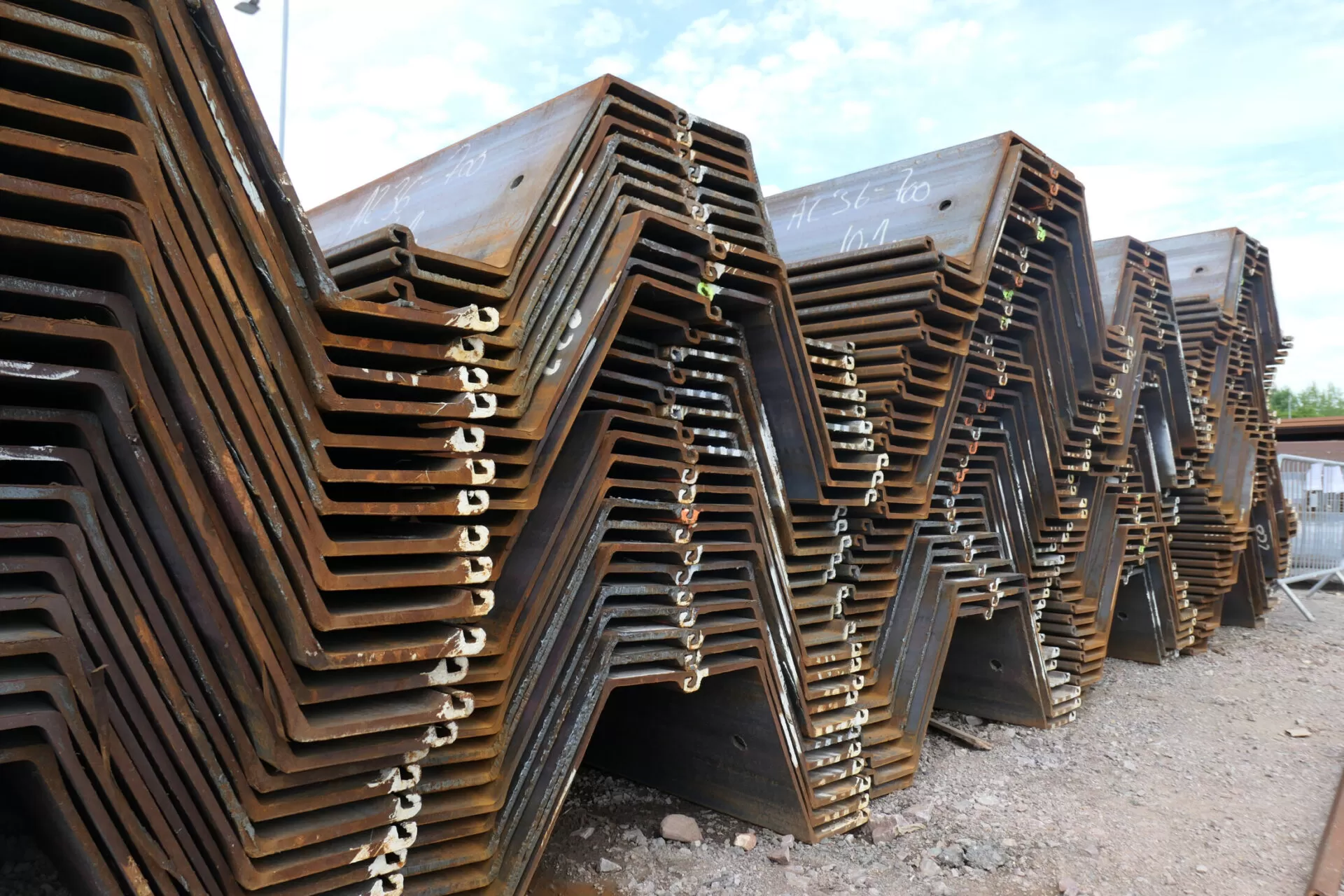
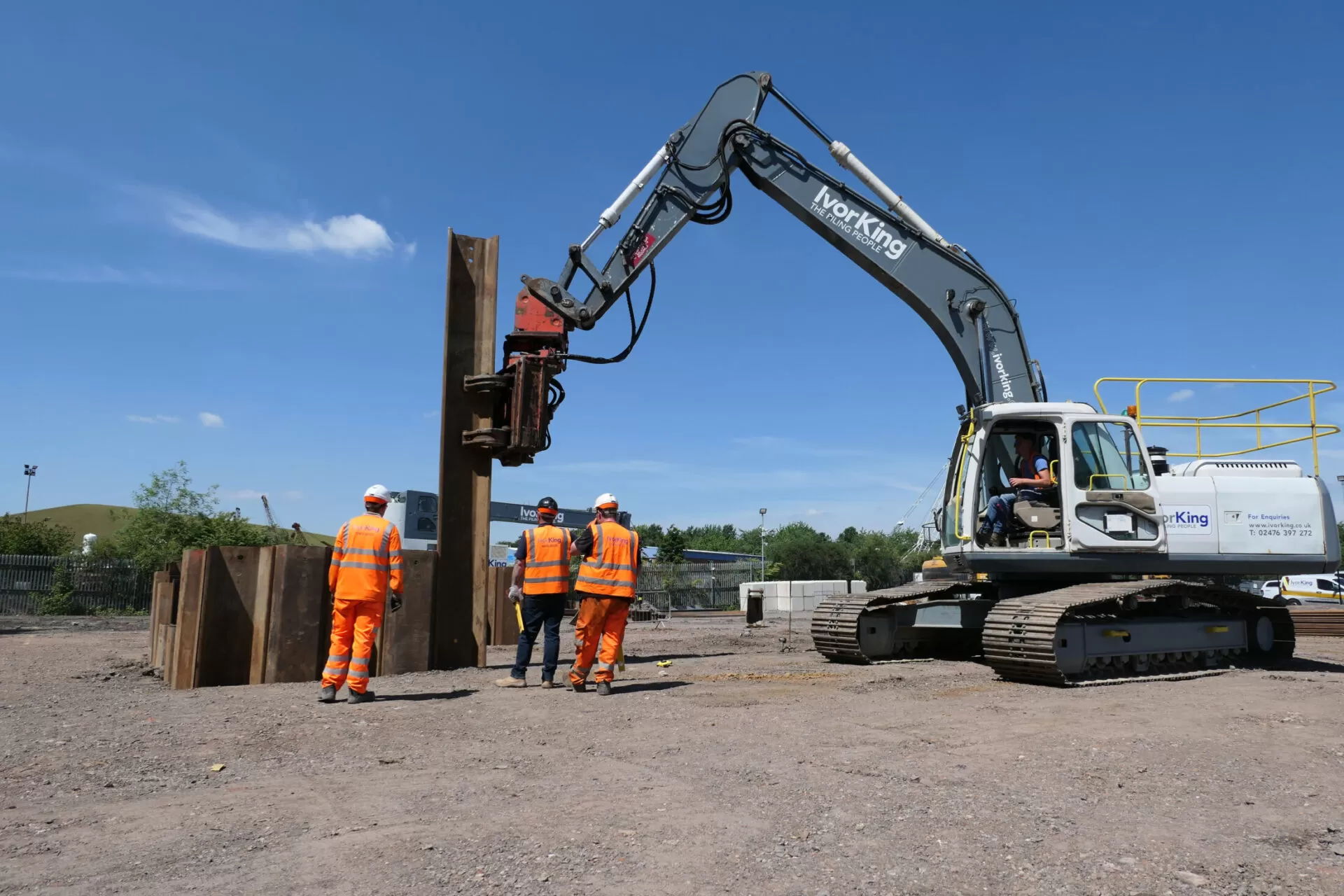
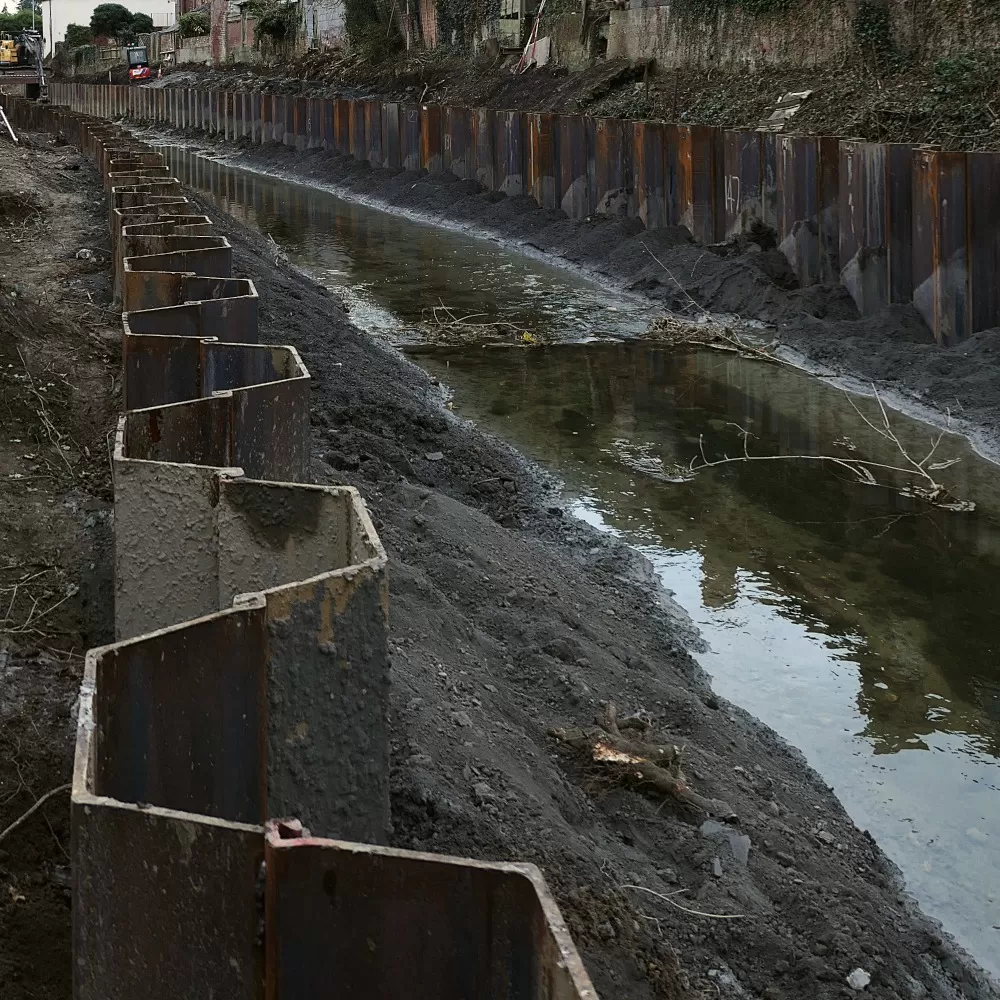
Sheet Pile Retaining Walls comprise of interlocking steel sheets driven or pressed into the ground to provide soil retention over an extended span, and have an exceptionally long service life.

Ivor King have been providing Sheet Pile Retaining Walls to the Construction and Civil Engineering sectors since 1974. We are market leaders in the design and installation of bespoke sheet pile solutions; a first-class reputation earned over decades working on a multitude of schemes and projects, large and small, delivering to a vast array of satisfied customers. There’s no substitute for experience.

Common applications include flood defence walls and coastal barriers, railway and highway embankments, retail and commercial service yards where there is a change in levels, plus axially loaded foundations and virtually anywhere a general barrier or retaining wall is required.

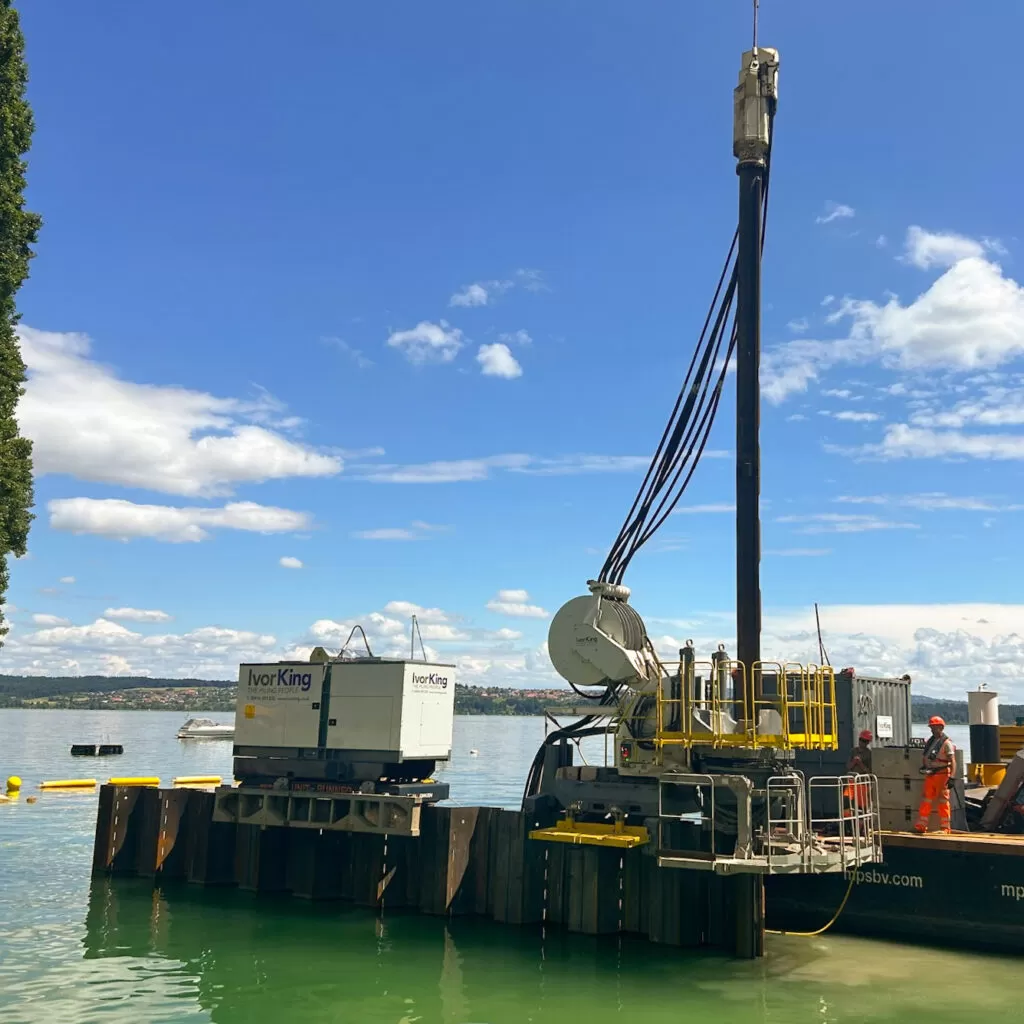
Where challenging ground conditions are encountered, our extensive range of specialist plant and equipment can install sheet piles with ease. Piling into rock and dense/hard ground whilst satisfying environmental restrictions, such as noise and vibration limits, is a routine operation for Ivor King. Likewise, we have the kit to overcome tight restricted sites and narrow corridors.

Our in-house design team ready to talk to you

Our experienced in-house technical design engineers are able to offer a full design service for any piling scheme. This includes the relevant Approval in Principal or Network Rail documentation, together with independent checking as applicable. The bespoke design of each sheet piling solution is dependent on a number of factors, among them site and ground conditions, the retained height and depth of piles required, and the application involved.

Once our Sheet Pile Retaining Walls are installed, follow-on excavation works or construction can commence immediately, negating the need for any curing period normally required for alternatives, such as secant and contiguous pile walls.

Optional extras for your project

The water tightness of any Sheet Pile Retaining Walls can be improved by adding clutch sealant (WADIT®), or by welding of the interlock. Furthermore, steel capping beams, fabricated by Ivor King, can be added to top sheet piles off, providing a flat surface for hand rails or barriers to be fixed.

Most often, sheet piles are left exposed as installed, providing a finished surface which blends in with its natural settings. However, sheet piles can be shot blasted and painted to improve aesthetics as required. In addition, a wide range of ‘non-structural’ cladding solutions can be constructed immediately in front of the wall if preferred.
Sheet Pile Hire & Sales Our dedicated hire and sales division is on hand to support all your temporary and permanent sheet pile needs

We are able to supply a wide variety of size, weight and grade of steel in both new mill certified piles and excellent quality used stock at competitive rates
piling solutions
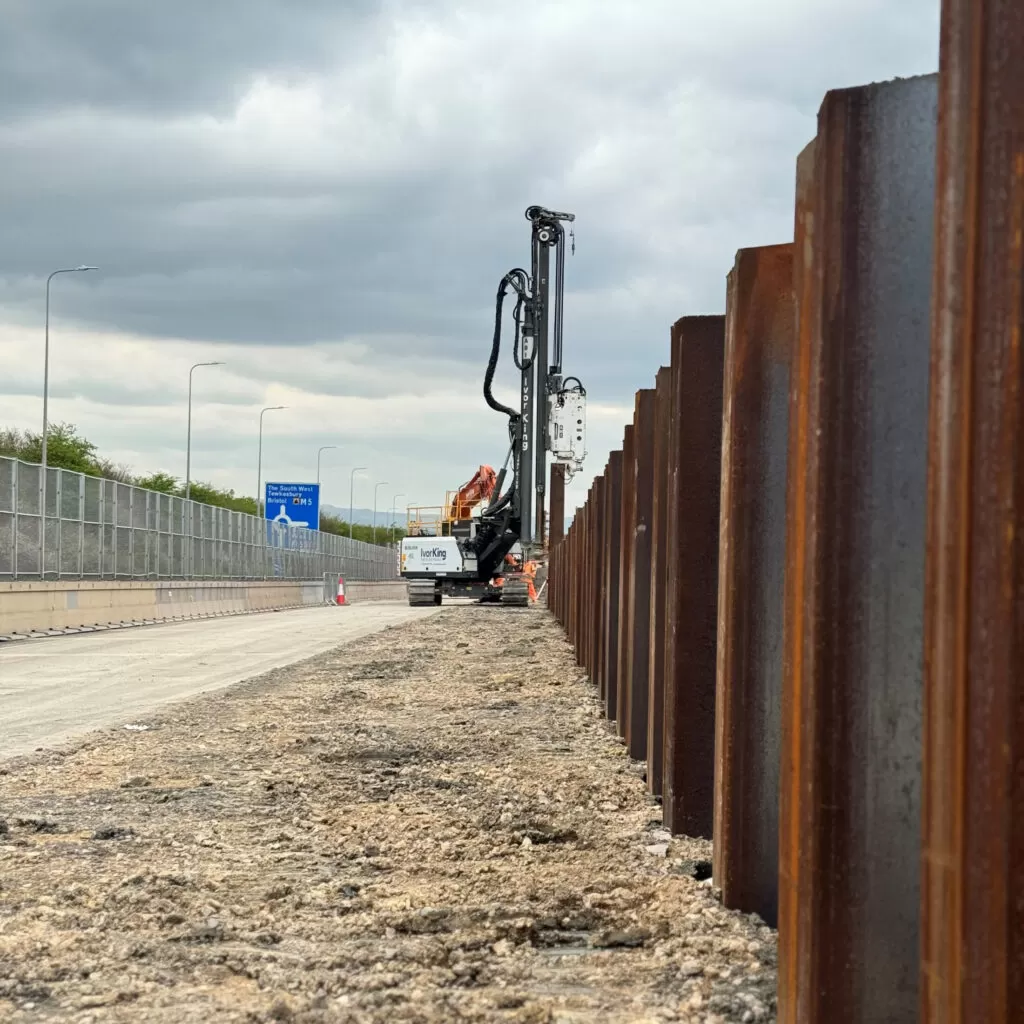
Sheet Pile Retaining Wall Square 02 M5 Strensham

What information is needed to design a sheet pile retaining wall? caret-down

The design depends on the ground conditions, retained height, groundwater and loads near the wall, as well as the space available for installation. A ground investigation report, site levels and layout drawings provide a useful starting point. Ivor King’s in-house design team can assess these details and determine the pile section, length and any additional support required.

How long can a steel sheet pile retaining wall last? caret-down

Steel sheet pile retaining walls can be designed for a service life of up to 120 years. This is not a standard lifespan for every wall: the design must account for the environment, corrosion exposure and the required working life. The pile specification and any protective measures are selected to suit the project.

Are sheet pile retaining walls watertight? caret-down

Sheet pile walls can be designed to control water, but the interlocking joints should not automatically be assumed watertight. Water resistance can be improved with clutch sealant, such as WADIT, or by welding the interlocks. The required level of water resistance and the groundwater conditions should be agreed during design so the appropriate details can be specified.

Can sheet pile retaining walls be installed near existing buildings? caret-down

Yes, subject to a site-specific assessment. Ivor King offers a range of installation methods, including vibration-free pressing, for projects where noise, vibration or restricted access are important considerations. The ground conditions, nearby foundations and services, and available working space all influence the choice of equipment and any monitoring needed.

Can a sheet pile retaining wall be painted or clad? caret-down

Yes. Sheet piles can be left exposed, shot blasted and painted, or finished with non-structural cladding in front of the wall. Steel or reinforced concrete capping beams can also provide a finished top edge and support suitable handrails or barriers. These details should be considered during design so that appearance, fixings and maintenance needs are allowed for.

Can excavation begin straight after the sheet piles are installed? caret-down

Steel sheet piles do not need a curing period, which can help follow-on work start sooner than with some concrete retaining systems. Excavation must still follow the agreed construction sequence. Any required props, anchors or other supports need to be in place at the specified stages before excavation proceeds.