GOT HERE Array ( [strictly_necessary] => Array ( ) [functional] => Array ( ) [performance_analytics] => Array ( [0] => Array ( [0] => Kuzsu [1] => [2] => ) ) [advertisement_targeting] => Array ( ) ) Conventional Sheet Piling | Ivor King - The Piling People Skip to content

Scroll to continue

Conventional Square

Key Benefits & Advantages


Enables driving of sheet piles in panels to ensure alignment and verticality

Vibratory or impact hammers can be used for sheet pile installation

Installation of sheet piles can be remote where working platforms cannot be constructed on the pile line.

Long, high modulus piles can be used with this method

Digital reporting to monitor pile installation

Traditional and long-established method of sheet piling that ensures a high tolerance installation

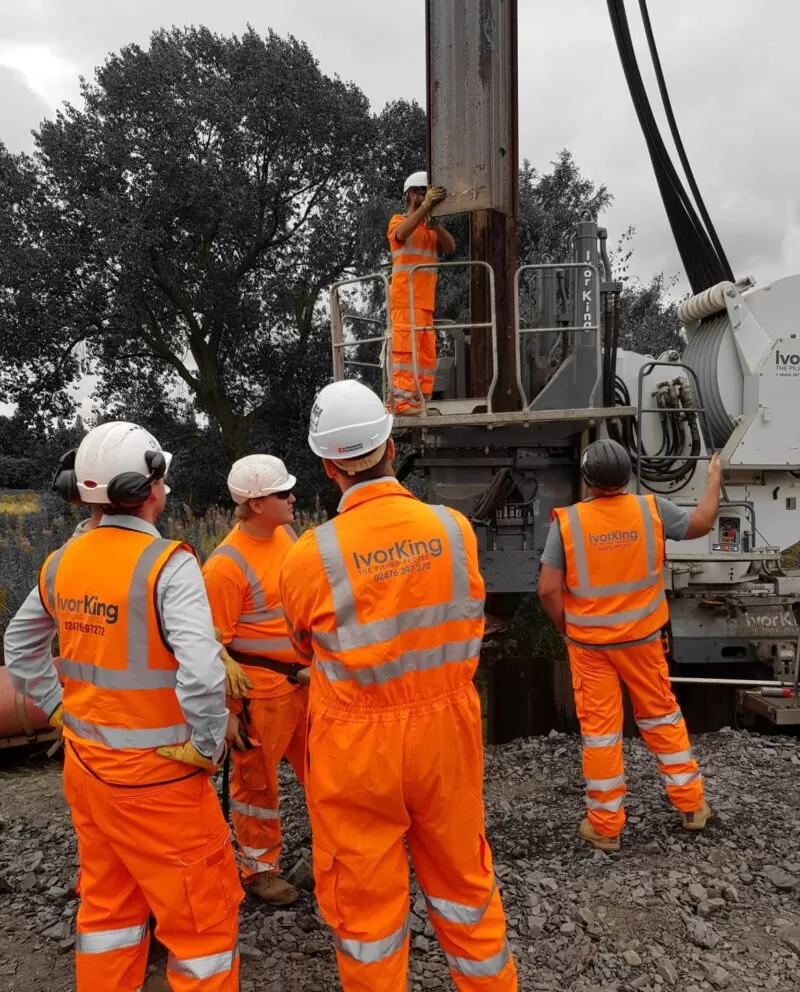
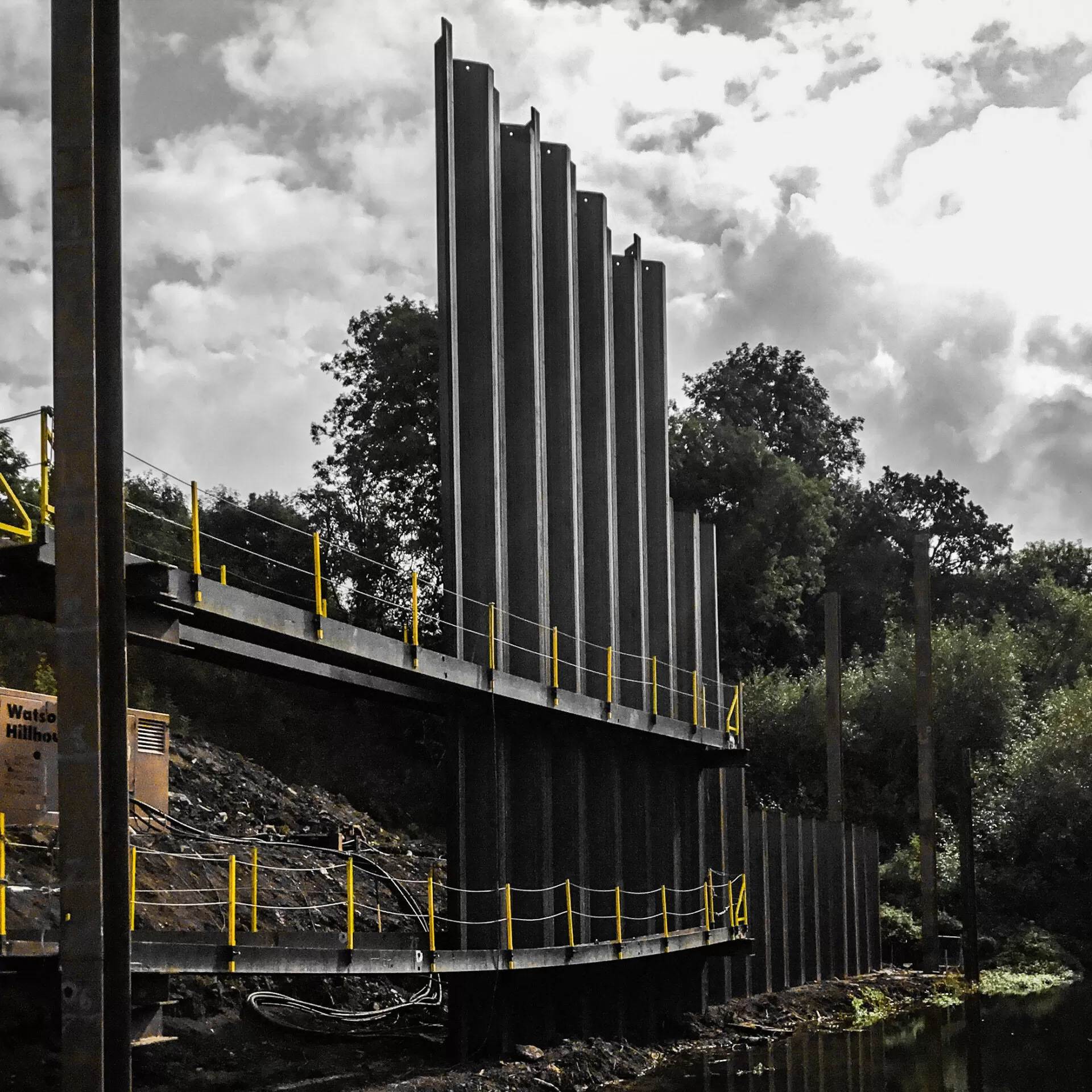
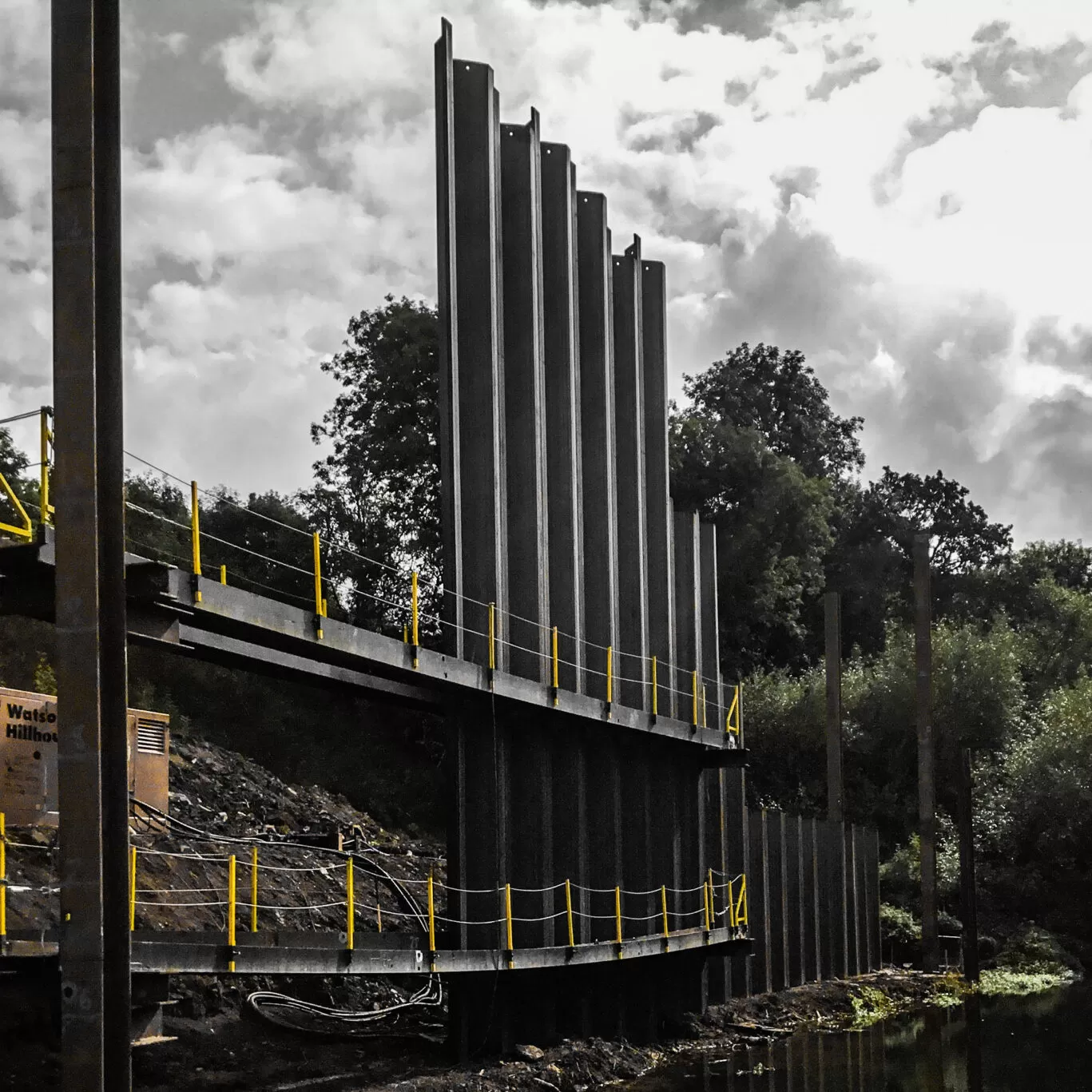
Conventional Sheet Piling, also known as Panel Driving, uses a temporary piling gate to install sheet piles in panels, using wailings and trestles to guide them during the pitching process. During the driving cycle, the sheet piles are secured in position by the piling gate and guided by previously installed piles to give a high degree of accuracy.

Sheet piles are slotted into a temporary piling gate by means of a crawler crane, then installed in pre-assembled panels using a hydraulic vibratory hammer. The sheet piles are then driven to depth with a hydraulic impact hammer. The Conventional Sheet Piling technique is particularly suited to challenging ground conditions.

Despite the emergence of new technology, the long-established method of conventional piling is frequently the best way to ensure all sheet piles are installed to a high tolerance in both the vertical and horizontal planes.
Our Piling Solutions Check out our full range of multi-disciplined Piling Solutions. Whatever your piling project, we’re your people.

Influences
Conventional Square

What is conventional sheet piling, or panel driving? caret-down

Conventional sheet piling installs sheet piles in groups using a temporary piling gate. A crawler crane positions the piles in the gate, which guides and supports the panel during installation. Vibratory and impact hammers are then used as required to drive the piles to depth. The method is particularly useful where ground conditions are challenging and accurate alignment is important.

How does a temporary piling gate help keep the wall aligned? caret-down

The gate uses horizontal guides, supported on trestles, to hold the sheet pile panel in position during pitching and driving. These guides, together with previously installed piles, help control the wall’s line and verticality. The gate arrangement and installation sequence are planned around the pile specification and the project’s required tolerances.

Why are both vibratory and impact hammers used in panel driving? caret-down

A vibratory hammer can install the sheet pile panel efficiently where the ground allows. An impact hammer can then complete penetration to the required depth or level where additional driving force is needed. The choice of hammer and the sequence depend on the ground conditions, pile profile and site restrictions, rather than every panel following an identical driving procedure.

Is conventional piling suitable for long or heavy sheet pile sections? caret-down

Yes. Conventional piling can accommodate long piles and high-modulus sections, which provide greater resistance to bending. The crane, piling gate and hammer must be selected for the pile dimensions and weight. Available headroom, lifting arrangements and ground conditions also need to be assessed before confirming the equipment and installation plan.

Can sheet piles be installed where plant cannot work directly on the pile line? caret-down

Conventional piling can allow installation from a position away from the pile line where a working platform cannot be formed along it. A suitable crawler crane handles the piles and suspended equipment from an accessible location. Crane reach and capacity, ground support, pile handling and the gate arrangement all need to be checked for the proposed setup.

Does conventional panel driving create noise and vibration? caret-down

The noise and vibration depend on the installation equipment used. Vibratory and impact hammers both generate noise and vibration, which must be considered alongside nearby structures and any project limits. Where those limits make hammer-driven installation unsuitable, Ivor King can assess alternative methods such as hydraulic press-in piling, subject to the ground conditions and pile design.