As one of the UK’s leading multi-disciplined piling contractors, it’s important to us that best practice is promoted when testing the many pile, foundation, anchoring and retaining methods we design and install.
Testing is a vital part of the cost, programme and risk reduction process. Amongst the various techniques offered by our outsourced geotechnical team are the three most common pile testing solutions; integrity, dynamic and static load testing.
Integrity Testing
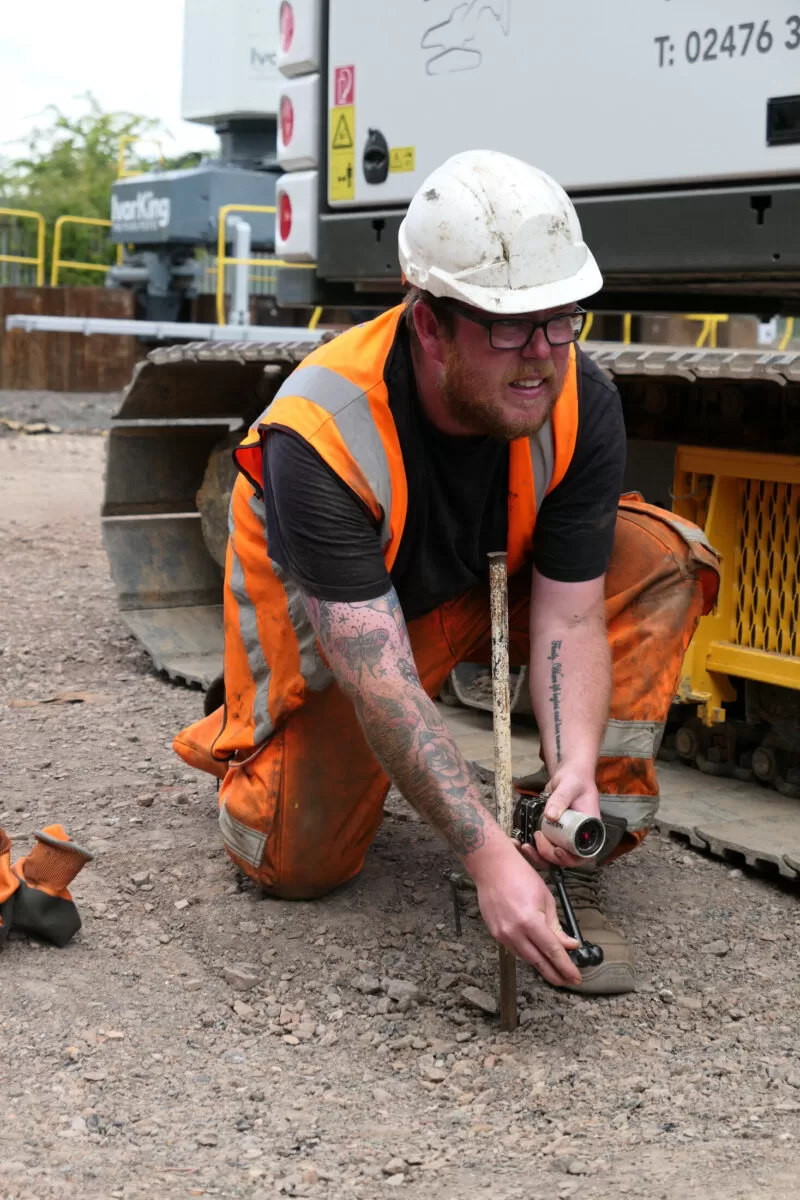
Integrity testing is a low cost quality control tool used to detect defects along the pile shaft and is typically carried out on 100% of piles on a project. We offer both sonic pulse echo and transient dynamic response methods. In some cases, this method of testing can provide an estimation of the pile length.
Dynamic Load Testing
By striking the pile with a drop hammer, the force and velocity at the pile top can be measured. Using stress wave theory, the measurements are analysed to predict the pile bearing capacity. Further computer analysis using CAPWAP software yields a variety of pile performance data including shaft resistance distribution, toe bearing and static load versus deflection data. This test method is an economic alternative or supplementary to traditional static load testing and can be applied to all pile types.
Static Load Testing
This involves the measurement of load and deflection at the pile top. The load is applied either by kentledge, or by jacking against a reaction beam restrained by anchor piles. The latter, as well as being considerably more cost effective, has the added benefit of being able to test in tension as well as compression.
Measurements from the load cell and deflection gauges are recorded on a data logger from which information on load versus deflection and load & deflection versus time can be produced.
Other specialist test methods are also available including integrity testing using sonic logging, parallel seismic testing to determine pile length and pile instrumentation to measure various parameters including strain, temperature and inclination.
Load testing of piles represents an estimated 5% of the value of the UK piling market and can typically account for up to 10% of the cost of the piling works. Fulfilling its traditional role of design validation and quality control, the testing also provides an opportunity for continuous improvement in foundation design, research & development and general construction practices.
Pile testing can be carried out at various stages of the pile installation dependant upon the agreed design method. Most often piling is designed using the site investigation data on either a re-measure or a lump sum basis, assuming the available data is adequate. Sometimes, however, test piles can be installed and tested, and the results analysed to ensure the proposed solution is suitable before continuing with installation of the working piles.
With Ivor King, you’re assured of a quality service using the latest innovative equipment and fully trained site teams, coupled with the expertise and level of professionalism you’d expect from a company of our experience, success and reputation.