GOT HERE Array ( [strictly_necessary] => Array ( ) [functional] => Array ( ) [performance_analytics] => Array ( [0] => Array ( [0] => Kuzsu [1] => [2] => ) ) [advertisement_targeting] => Array ( ) ) Rotary & Bored Displacement Piling | Ivor King Skip to content

Scroll to continue

Piling solutions

Key Benefits & Advantages


Minimal disturbance – hence limited risk of damage to adjacent structures

Suitable for all soil types

Ideal for retaining walls

Speedy and efficient installation

No pile arisings to dispose of

Minimal disturbance – hence limited risk of damage to adjacent structures

OK for limited access

High production efficiency

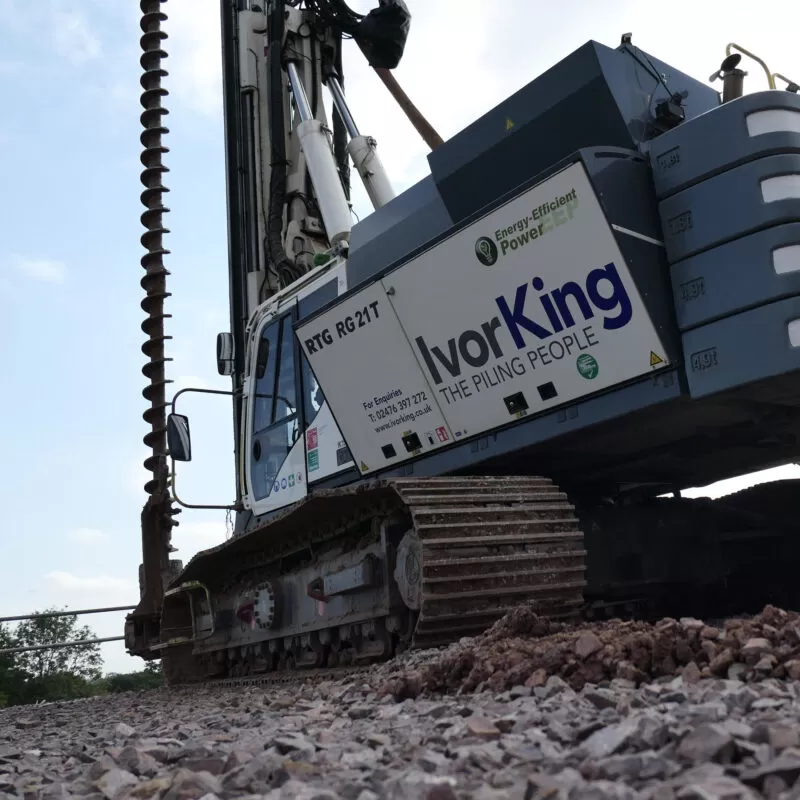
Rotary Bored Piles

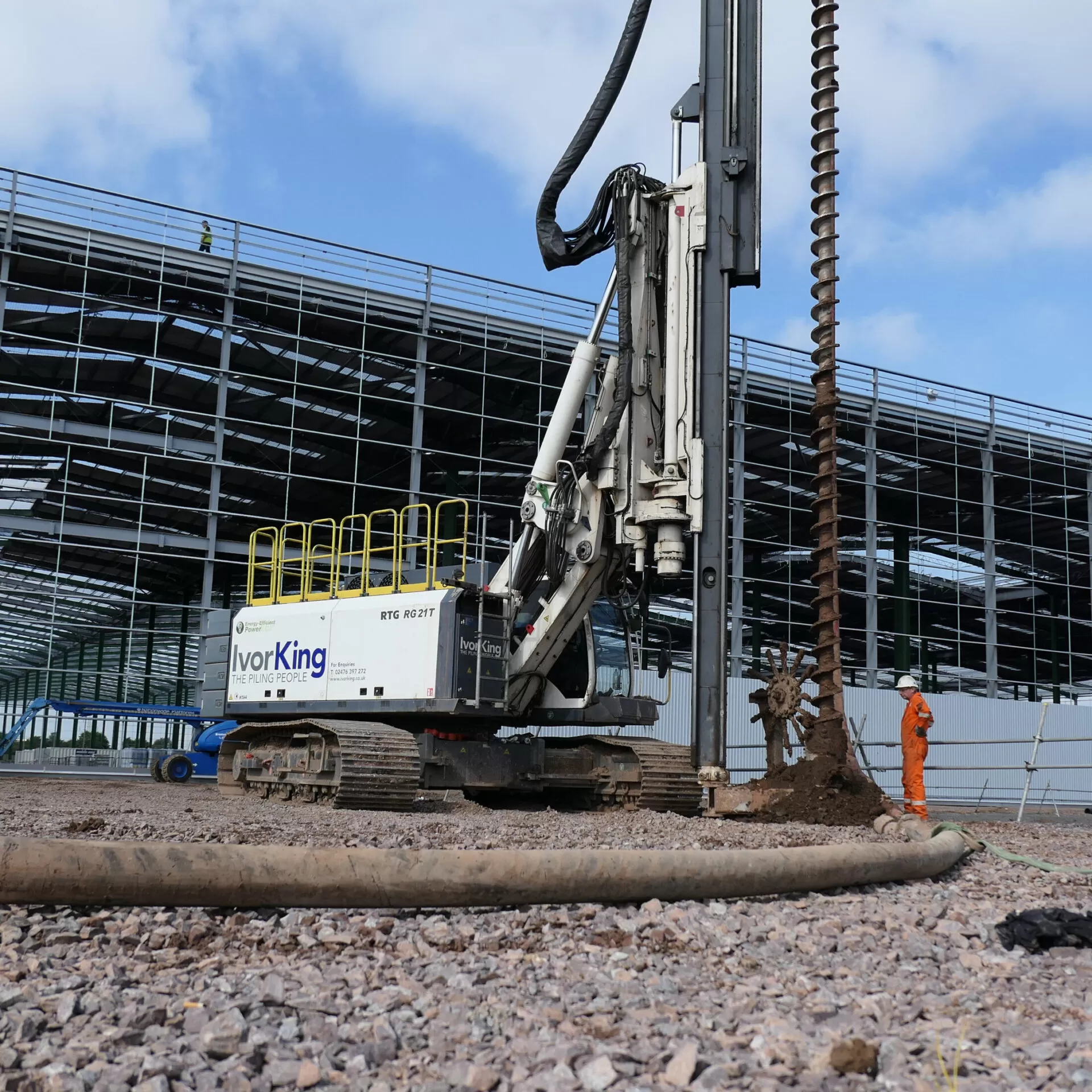
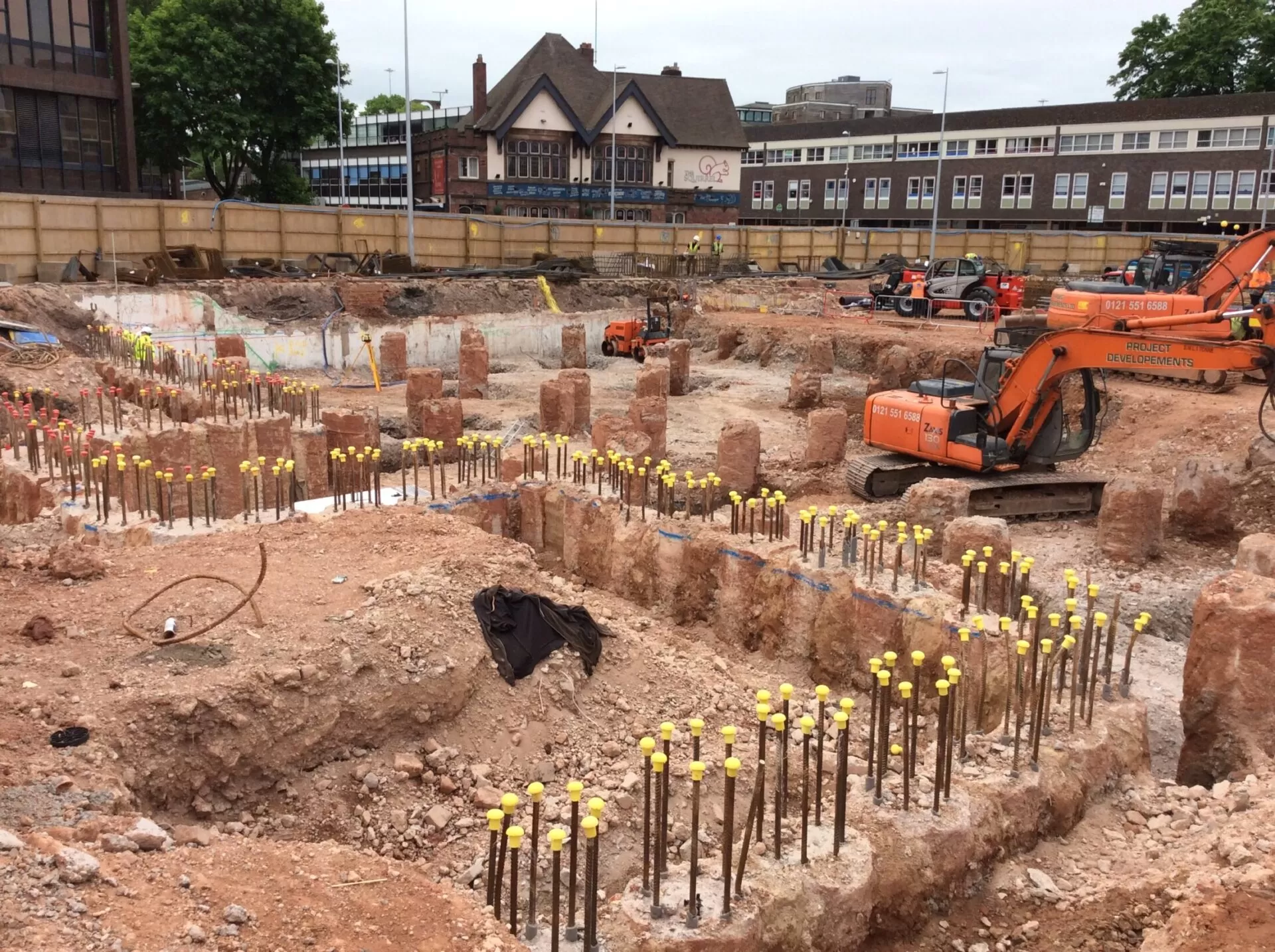
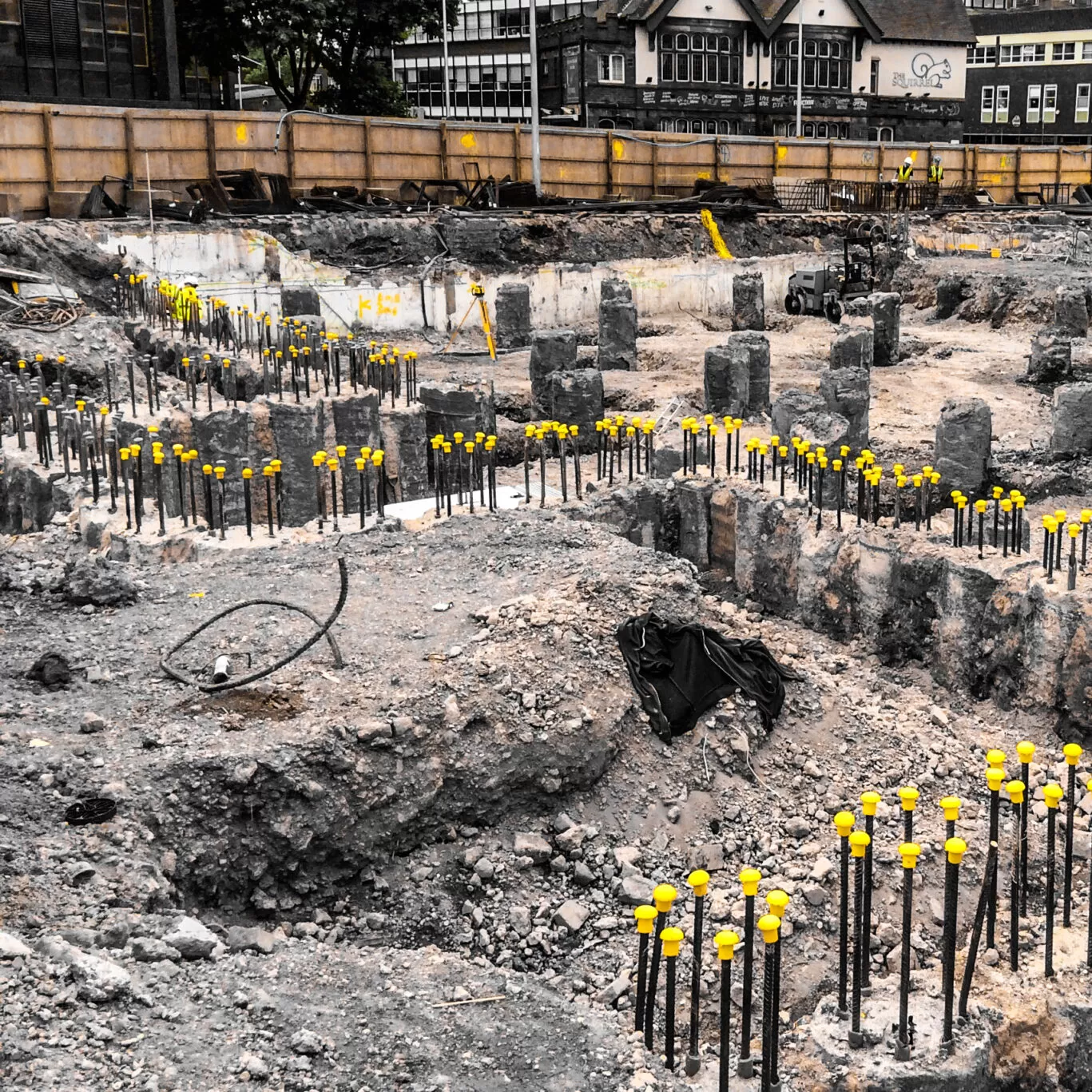
Rotary bored piles are often larger diameter than conventional continuous flight auger (CFA) piles. They are used to support greater loads, overcome underground obstructions and to penetrate ground too hard to bore using continuous flight auger techniques. Rotary pile installation can also be used to create piles with a cut-off level beneath the platform level. Because the rotary bored technique enables the reinforcement to be added into the open bore rather than into the ready poured concrete, as in CFA, it has the distinct advantage of allowing the cage to be the full depth of the pile.

Depending on the rig, the installation of piles over 40m deep and up to 2.5m diameter is possible. This is a straightforward method of piling and is advantageous when compared to CFA, as the size and depth range is greater and a number of piles can be drilled in advance of concreting. A further advantage of rotary or open hole piling is that with special tools the base of the hole can be reamed out to create a bell shape to increase the bearing area of the pile.

Rotary piling is often used in places such as factories and town centres where it can often be difficult to ensure a consistent and timely supply of concrete.

Bored Displacement Piles

A continuous displacement pile is a bored pile which displaces the soil through which it is constructed. It therefore creates no appreciable arisings ensuring that there is minimal spoil to remove from site.

This type of pile can be used for all foundation applications where bearing piles are required for buildings or structures. It can also be used where there is a retaining requirement. The ability to form bored piles without producing any spoil makes this kind of pile particularly advantageous on contaminated sites. The technique produces minimal vibration and noise. In most ground conditions, this pile is an ideal alternative to CFA (continuous flight auger). Enhanced load carrying capacity may be achieved compared with CFA piles of similar dimensions, due to compaction of the soil during boring. In some ground conditions improvements of up to 30% have been demonstrated with a consequential shortening of the pile and reduction in cost.
Our Piling Solutions Check out our full range of multi-disciplined Piling Solutions. Whatever your piling project, we’re your people.

Influences
BORED Sq

What is the difference between rotary bored and bored displacement piling? caret-down

Rotary bored piling removes soil to create an open bore, which is then reinforced and filled with concrete. Bored displacement piling pushes the soil aside as the pile is formed, producing very little spoil. The choice depends on the ground conditions, loads and site constraints: the two methods offer different benefits and are not interchangeable on every project.

When would rotary bored piling be chosen instead of CFA piling? caret-down

Rotary bored piling can be useful where a project needs larger or deeper piles, where the ground is too hard for CFA equipment, or where underground obstructions must be overcome. It also allows reinforcement to be placed in the open bore before concreting, making full-depth cages possible. The ground investigation and foundation design determine whether these advantages are needed.

Does bored displacement piling reduce spoil removal? caret-down

Yes. Bored displacement piling moves soil sideways rather than bringing it to the surface, so it produces very little spoil. This can reduce the amount of material that needs to be handled and removed, which is particularly useful on contaminated sites. Suitability still needs to be assessed against the ground conditions and the site’s contamination requirements.

Can bored displacement piling be used near existing buildings? caret-down

Bored displacement piling produces low levels of noise and vibration, which can be useful near occupied buildings. However, it displaces the surrounding soil, so the effect on nearby foundations and services needs to be considered. The piling design and installation method should account for the ground conditions, separation distances and any monitoring requirements.

Can rotary bored piles accommodate full-depth reinforcement? caret-down

Yes. With rotary bored piling, the reinforcing cage is lowered into the open bore before concrete is placed. This allows the cage to extend for the full pile depth where the design requires it. The reinforcement length and arrangement are determined by the structural design and the installation conditions.

What information is needed to choose between these piling methods? caret-down

A ground investigation report, foundation loads and drawings provide the starting point. Access, working space, nearby structures, known obstructions and any contamination also affect the choice. Share the information you have with Ivor King’s technical team so they can assess the piling options and identify any further details needed for the design.