GOT HERE Array ( [strictly_necessary] => Array ( ) [functional] => Array ( ) [performance_analytics] => Array ( [0] => Array ( [0] => Kuzsu [1] => [2] => ) ) [advertisement_targeting] => Array ( ) ) Combination Wall Solutions | Ivor King - The Piling People Skip to content

Scroll to continue

Combi Squared

Key Benefits & Advantages


High strength solution combining maximum stability with economical weights

The high inertia of the system results in low deflection values

Increased vertical load bearing capacity

Ability to penetrate very hard ground

High lateral impact resistance

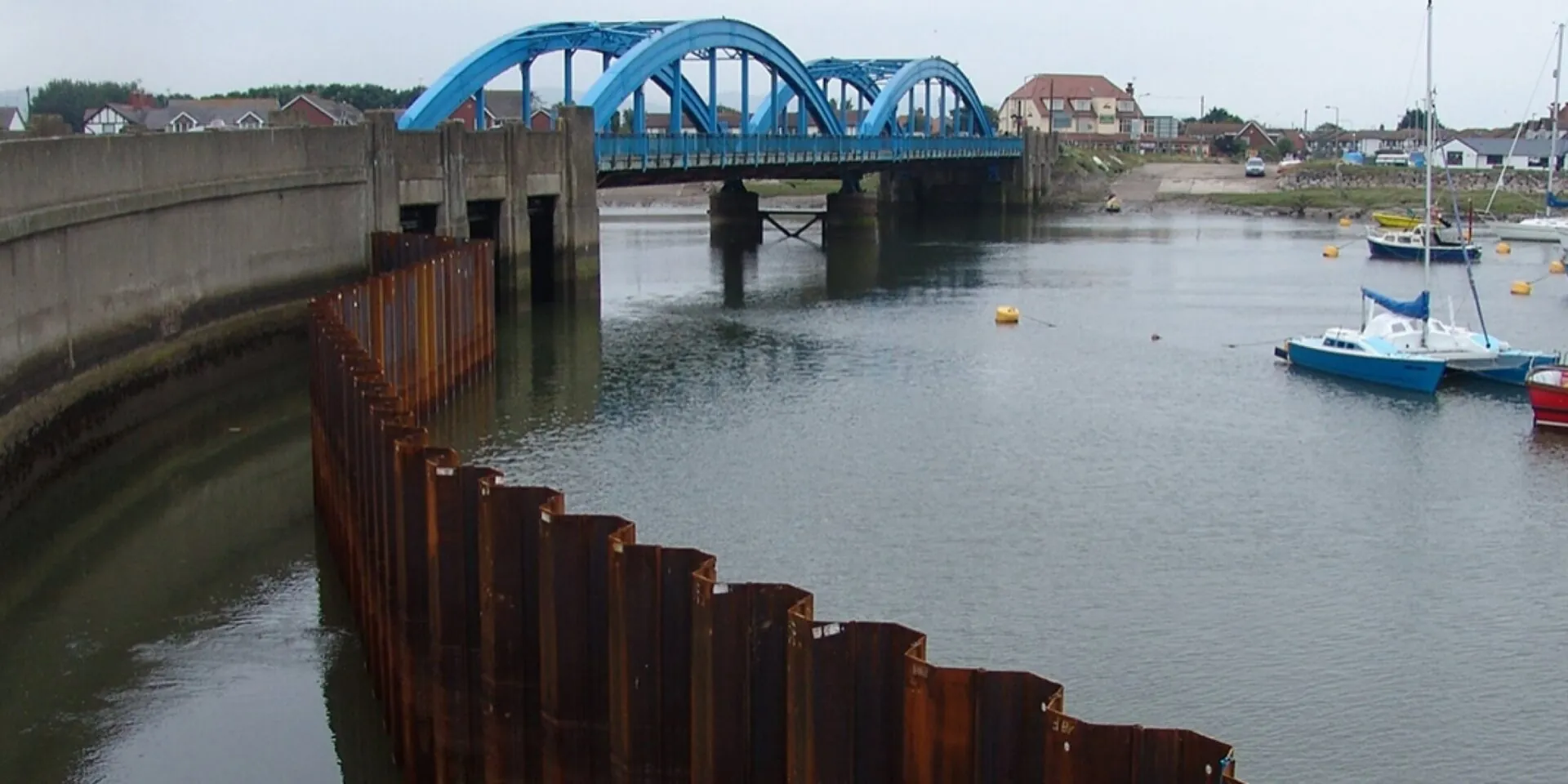
A cost effective solution most commonly used in marine applications where large dredge depths are required between the sea bed and the top of the wall.

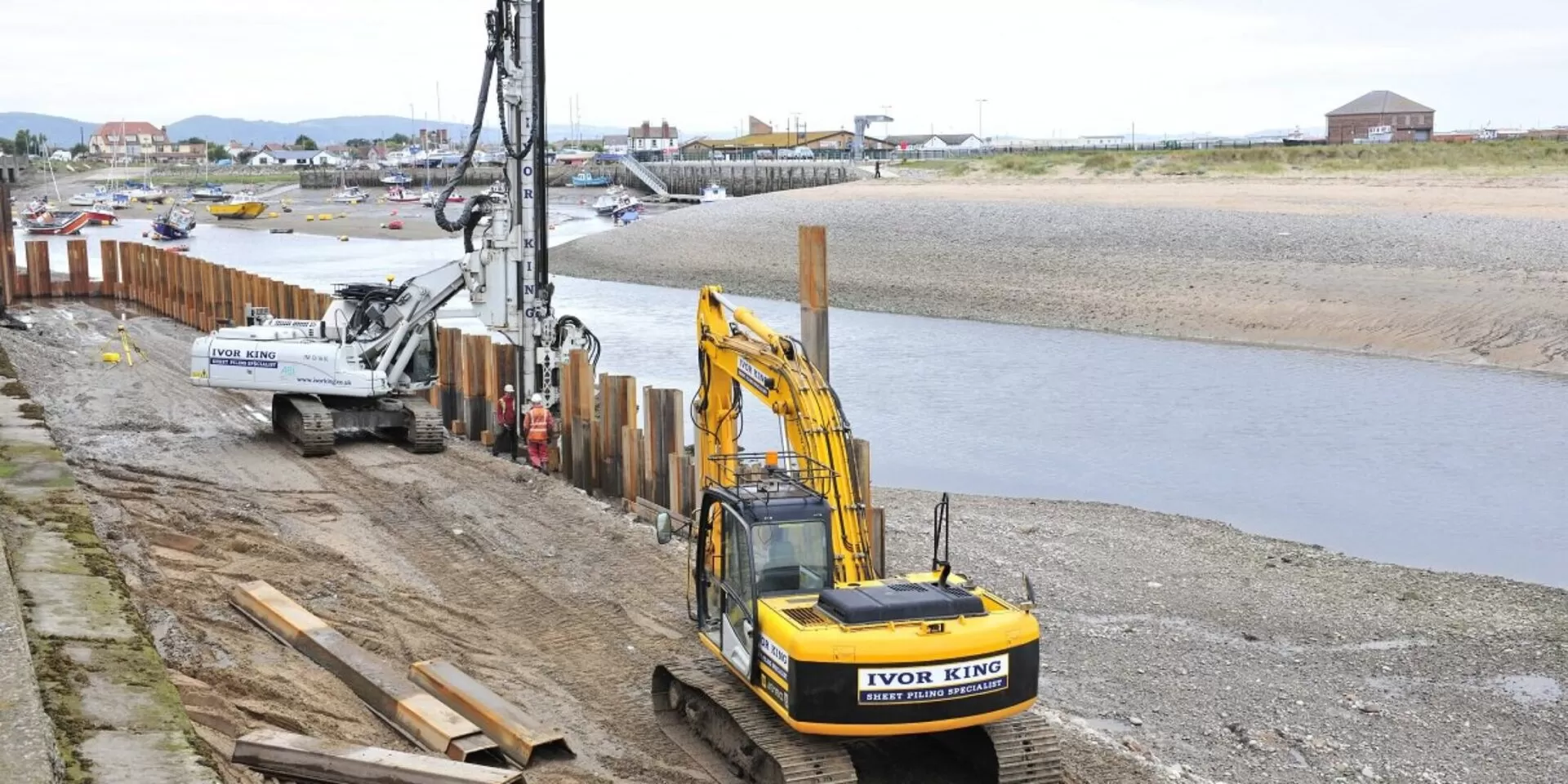
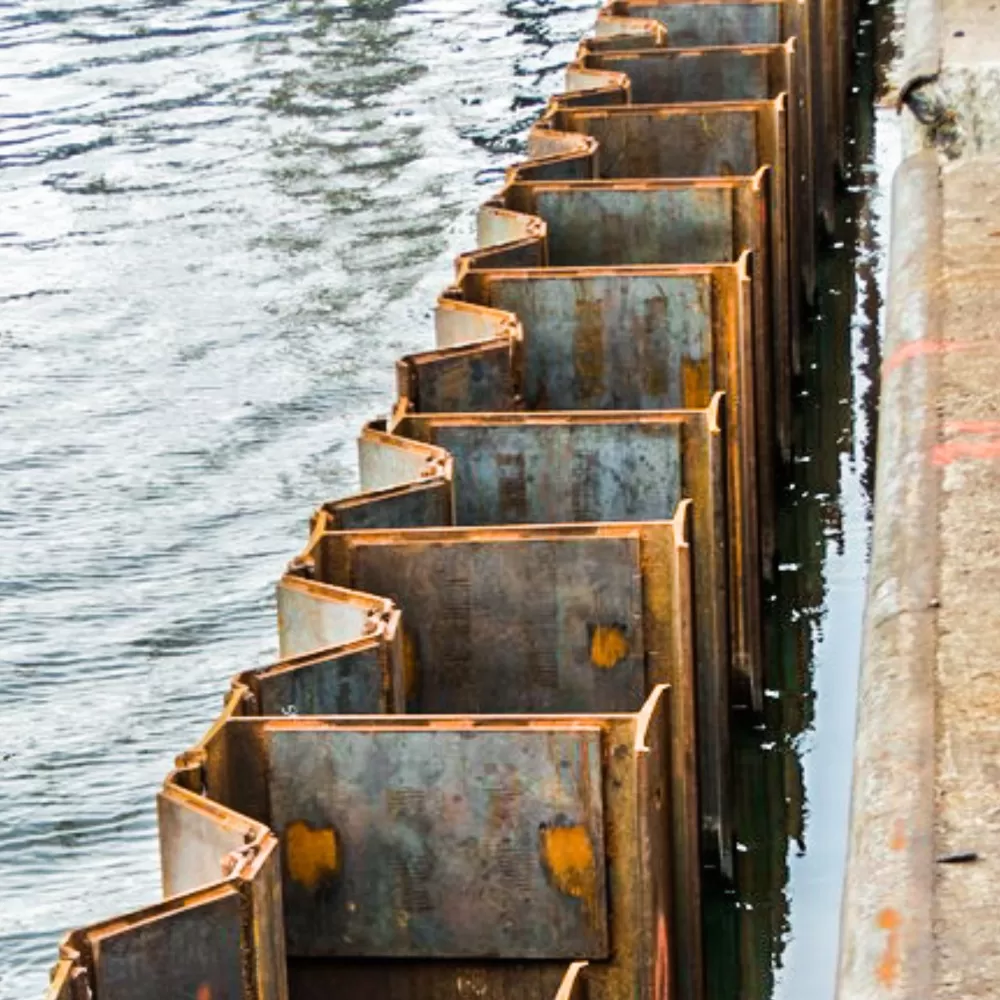
Combination sheet pile walls are typically formed by joining a pair of sheet pile sections with regularly spaced king pile patterns and are typically used when regular sheet piles are not strong enough to carry the required loads.

The two main components of a combined wall system are the king pile (HZM or tube) together with intermediate sheet piles. The H pile uses standard clutch connections to enable effective transfer of loading from the adjacent sheet piles. The sheet piles are normally shorter than the H piles, varying from 60% to 100% of the length. The H piles are often designed to carry substantial vertical loads in addition to the normal bending loads.

Combination Walls are generally used for large retained heights or where ground conditions are too weak to offer sufficient resistance to the pile loads, requiring long piles to reach more competent soils. In marine applications, it is common for the king piles to be driven to a greater depth so that a bigger axial capacity is obtained.

Ivor King is dedicated to offering the most efficient combination wall system to suit your specific project needs.
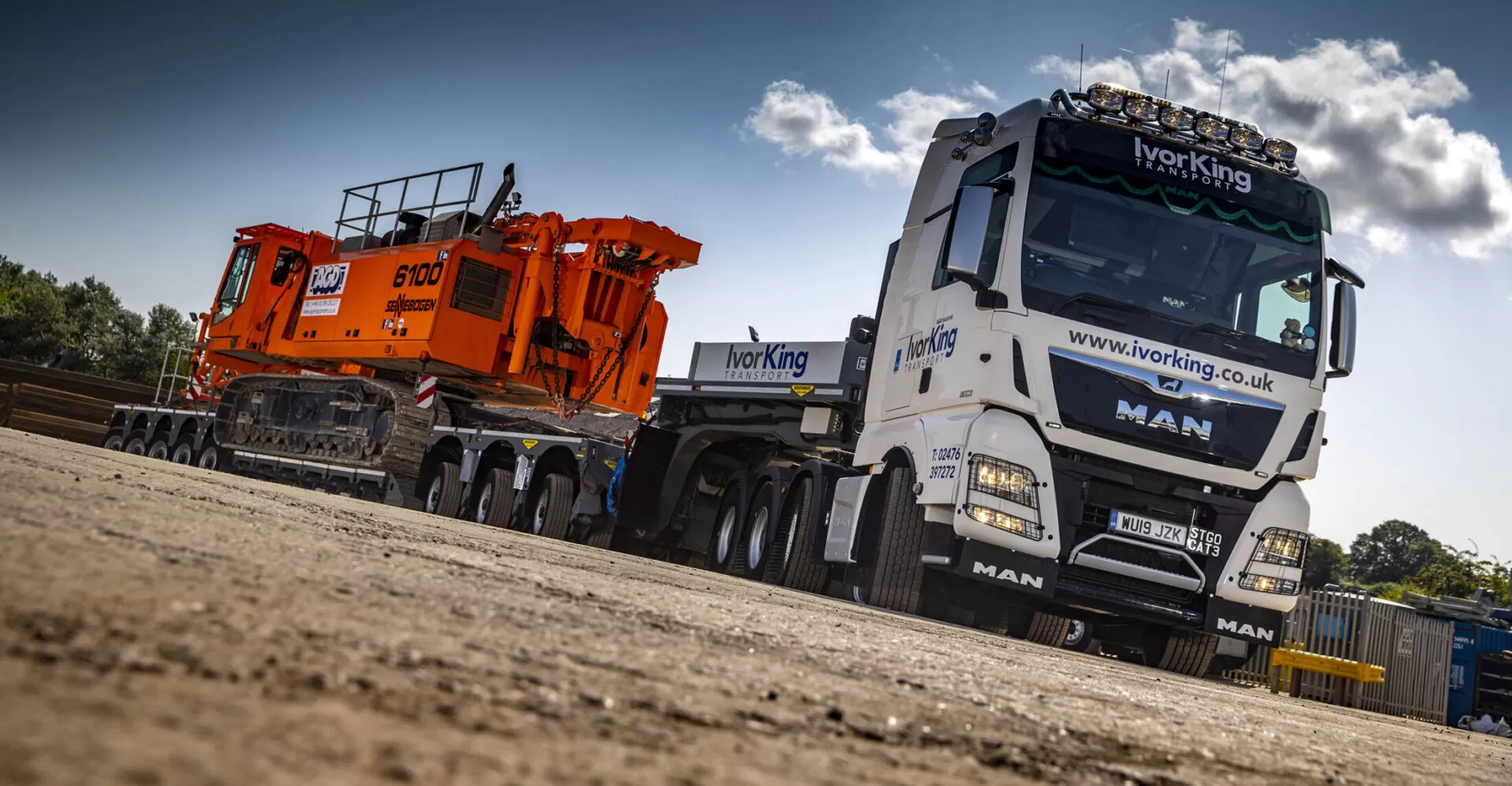
Transport Services Specialist transport of heavy, long or abnormal payloads

In addition to supporting our own successful operation, our fleet of heavy haulage vehicles are also available for any external transport requirements that you may have – large or small.
Heavy Haulage
piling solutions

What is a combination wall system? caret-down

A combination wall is a high-strength retaining system that uses regularly spaced structural king piles together with intermediate sheet piles. The king piles provide the main bending and load-bearing capacity, while the sheet piles span between them and retain the ground. This arrangement can provide greater strength than a conventional sheet pile wall.

When is a combination wall preferable to standard sheet piling? caret-down

Combination walls are typically considered where conventional sheet piles cannot carry the required loads, where large retained or dredge depths are involved, or where weak ground requires longer piles to reach competent strata. They are widely used in marine and heavy civil engineering applications, subject to project-specific design and installation constraints.

What are the main components of a combination wall? caret-down

The two principal components are structural king piles—commonly HZM sections or tubular piles—and intermediate sheet piles. Clutch connections transfer loading between the elements. The intermediate sheet piles are often shorter than the king piles, with their required length determined by the wall design, ground conditions and retained height.

What are the key benefits of combination wall construction? caret-down

Combination walls can provide high bending strength with economical section weights, low deflection, increased vertical load capacity and strong lateral impact resistance. Suitable systems may also penetrate hard ground and accommodate substantial retained heights. The relevant benefits depend on the selected sections, ground conditions, installation method and structural design.

Why are king piles sometimes driven deeper than the sheet piles? caret-down

King piles carry the primary structural loads and may need to extend into stronger ground below the intermediate sheet piles. In marine applications, driving them deeper can increase axial capacity and stability where large dredge depths or weak seabed materials are present. The final pile lengths are established through geotechnical and structural design.

What information is needed to design a combination wall solution? caret-down

Useful information includes retained and dredge levels, structural and vertical loads, ground investigation and groundwater data, design life and corrosion requirements, site access, installation constraints, nearby structures and services, and the construction programme. We can assess these factors to develop an efficient system suited to the project requirements.