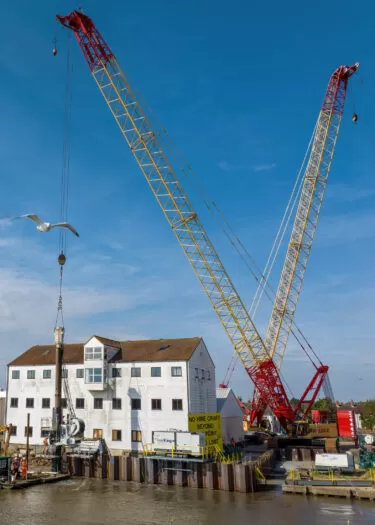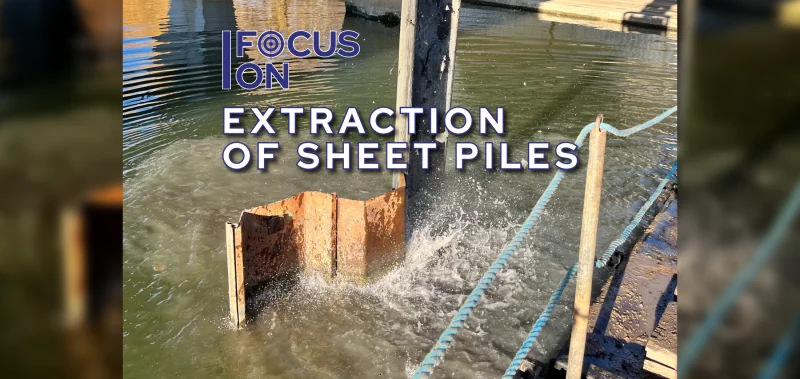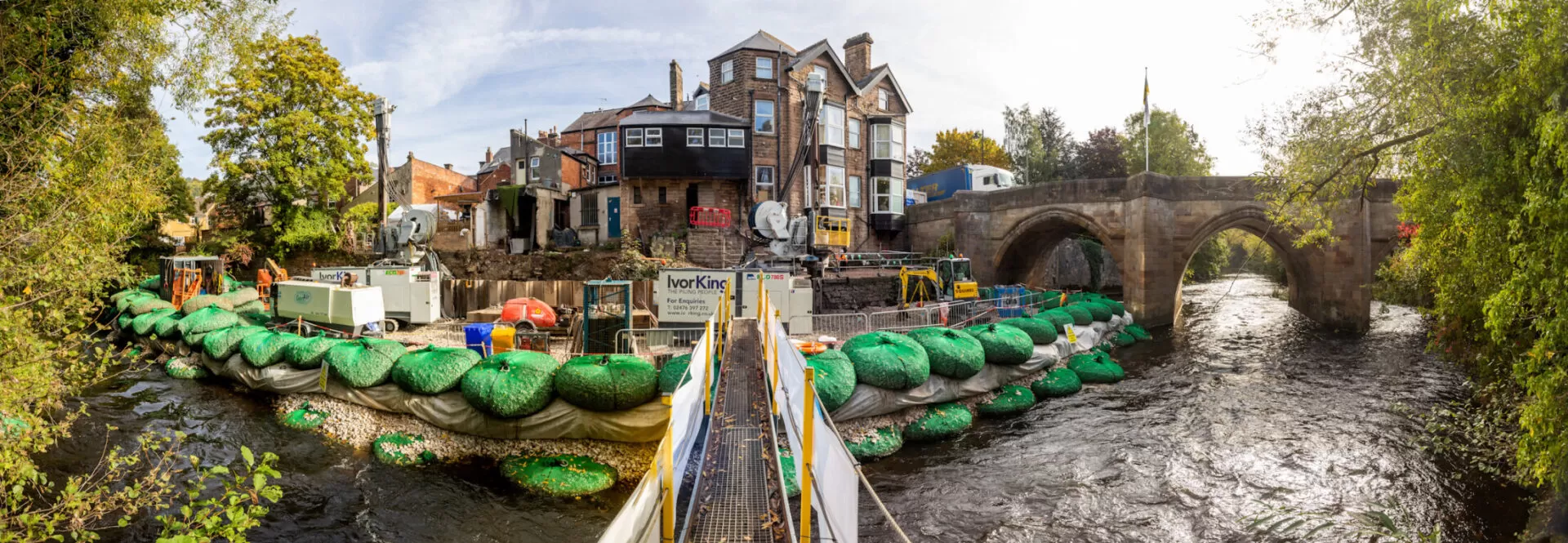
Steel sheet piling can help reduce flood risk by forming retaining walls and barriers, reinforcing riverbanks and replacing damaged flood defences. Its design and installation must suit the site’s ground conditions, water levels and surrounding structures.
At Ivor King, we have delivered specialist piling solutions since 1974, supporting flood alleviation schemes across the UK. Our inland waterways and marine piling services support flood defence, riverbank and water retention projects.
Flood Action Week highlights the importance of understanding flood risk and preparing for it. This article looks at how engineered pile walls can contribute to flood protection.
How does sheet piling help reduce flood risk?
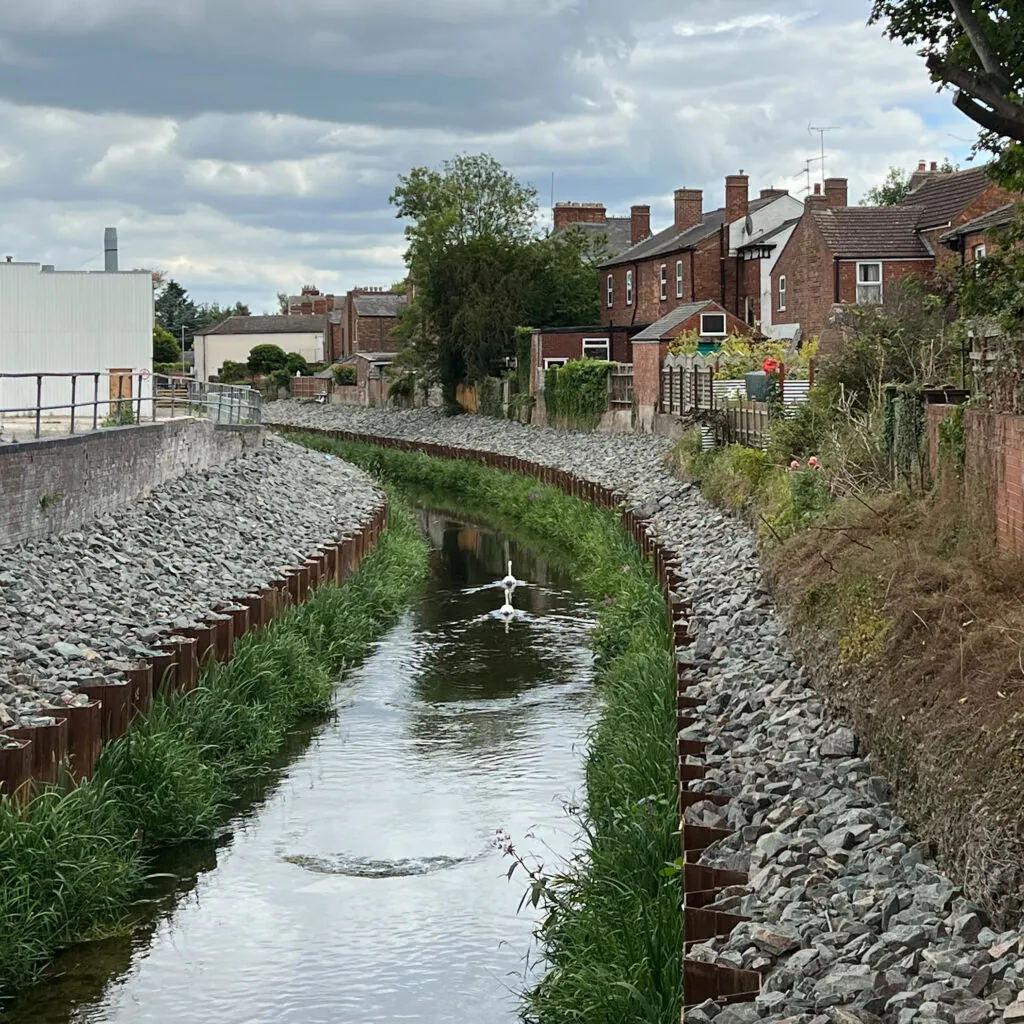
Steel sheet piles are interlinking sections of steel, driven or pressed into the ground to create a continuous wall. Their strength and durability make them well suited to flood defence applications, including river walls, coastal barriers, embankments and water retention structures.
Depending on the requirements of a scheme, sheet piling can be used to:
- Strengthen existing flood defences by reinforcing vulnerable riverbanks and replacing damaged or failed sections of retaining wall.
- Help control water movement by forming barriers designed to restrict water penetration and manage changes in ground and water levels.
- Reduce erosion by stabilising riverbanks and protecting surrounding land and infrastructure.
- Protect communities and assets by forming part of wider flood defence systems designed to reduce flood risk.
Every scheme brings its own challenges. Ground conditions, water levels, access restrictions, environmental considerations and nearby buildings all influence the most appropriate solution.
Finding the right solution for each site
Successful flood alleviation work requires more than simply installing steel piles. The design, installation method and choice of equipment must all be suited to the site and its surroundings.
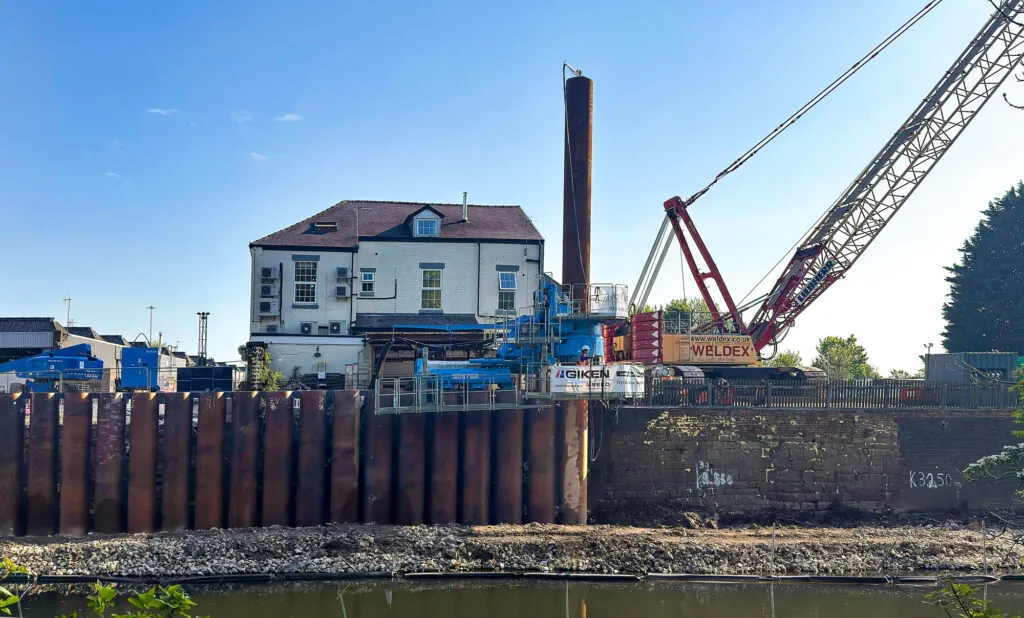
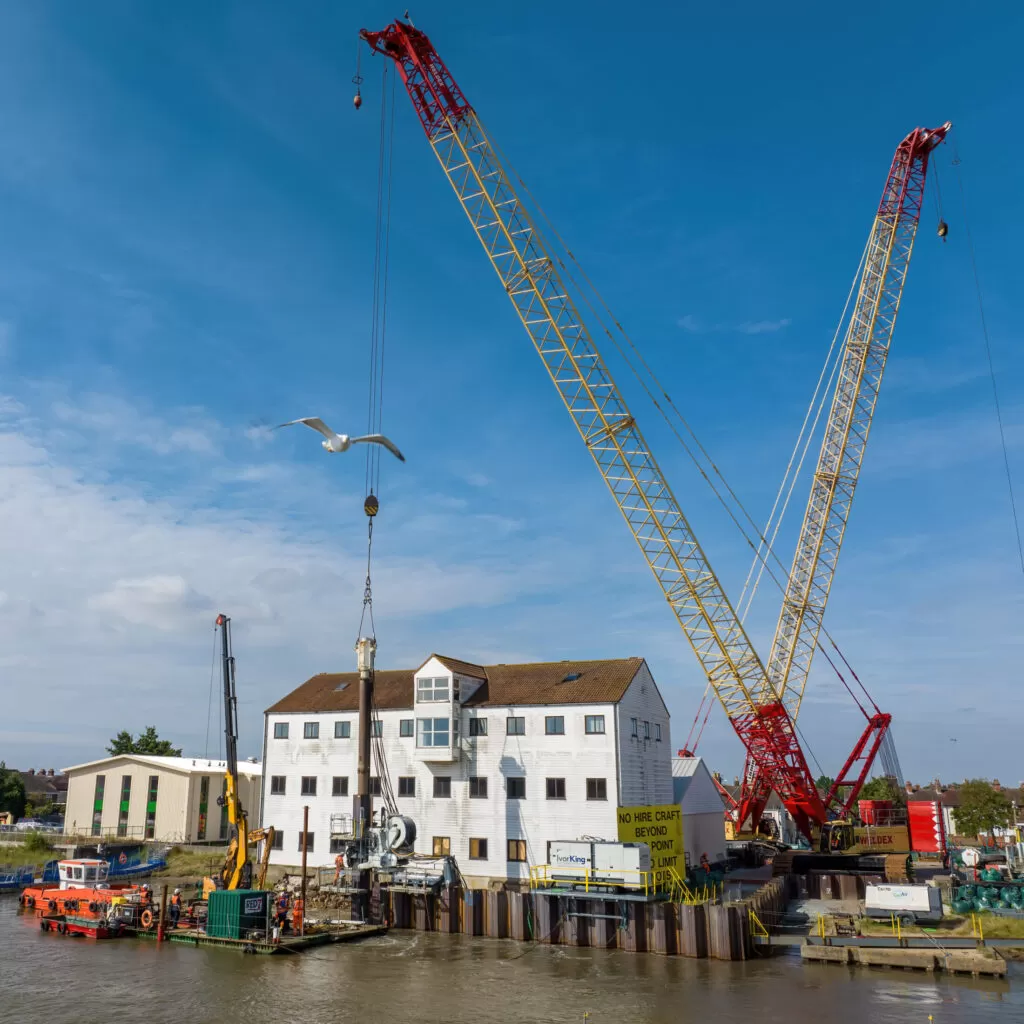
Traditional piling methods remain effective for many applications, while specialist hydraulic pressing equipment can offer an alternative where noise and vibration need to be minimised. Our Giken silent piling technology, for example, enables sheet piles to be pressed into the ground with significantly reduced noise and vibration, making it particularly useful around sensitive structures and in built-up areas.
Our in-house technical team can support projects from design development through to installation. Our piling design services help assess ground conditions, structural requirements and site constraints so the proposed solution suits the project.
Working towards a more flood-resilient future
Flood protection is an ongoing challenge, requiring careful planning, appropriate engineering solutions, and investment in infrastructure that can meet the demands placed upon it.
Ivor King combines over 50 years of experience with specialist equipment and in-house technical expertise to deliver solutions tailored to each project.
Planning a flood alleviation or riverbank protection scheme? Discuss your flood defence project with our team. Share your site location, available drawings, ground investigation information and programme so we can discuss suitable design and installation options.
Explore the range of steel piling solutions we design and install.
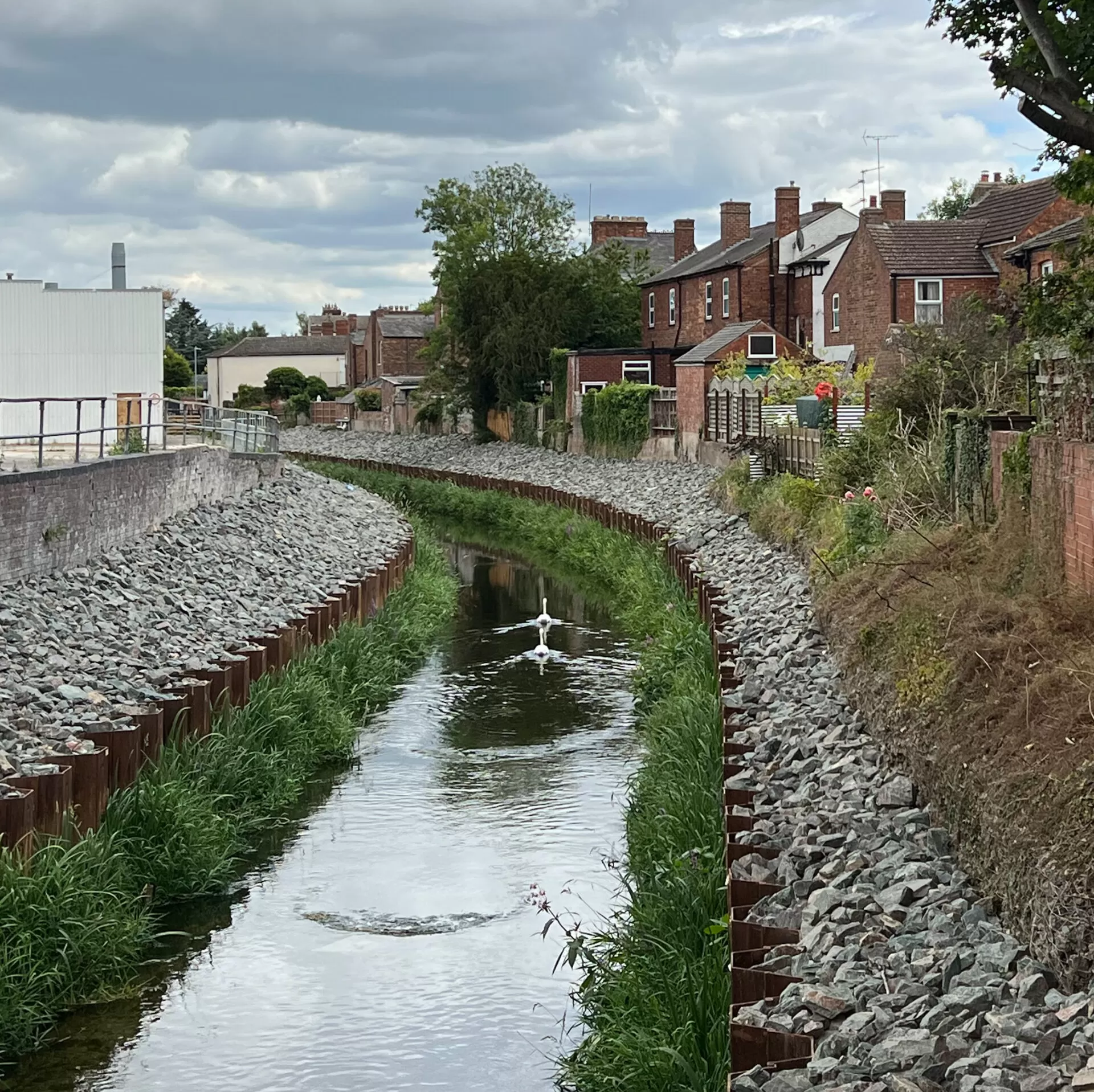
Steel sheet piling can form retaining walls and barriers within a wider flood defence scheme. It can support riverbanks, replace damaged wall sections and help control water seepage. Its role depends on the scheme design, water levels, ground conditions and the assets being protected.
A sheet pile wall should not automatically be described as watertight. The steel itself is impermeable, but water can pass through the interlocks between piles. Where greater resistance to seepage is required, the design may include suitable interlock sealing or welding to meet the project requirements.
Sheet piling can be used to stabilise vulnerable riverbanks or replace damaged sections of retaining wall as part of a flood alleviation scheme. The condition of the existing structure, ground investigation, access and water levels need to be assessed before deciding how new works should be incorporated.
The installation method can be selected to suit noise, vibration and access constraints. Hydraulic press-in piling may be appropriate where vibration needs to be avoided. Ground conditions, nearby structures and the practical requirements for handling piles must still be assessed for the individual site.
The cost depends on the required wall length and pile dimensions, ground conditions, water levels, access, installation method and programme. Design, temporary works and working over water can also affect the scope. A project-specific estimate needs the available drawings and site information.
Provide the site location, available drawings, ground investigation information, proposed programme and details of the flood protection or riverbank works. Include known water levels and any access, environmental, noise or vibration restrictions. The team can then discuss design support and suitable installation options.
Our Piling Solutions Check out our full range of multi-disciplined Piling Solutions. Whatever your piling project, we’re your people.

featured case studies
View AllDerby Riverside (Gyropress) A high-modulus retaining wall formed of 16m long steel tubular piles of 1000mm in diameter, installed through an existing flood wall, using the Giken Gyropiler System
Grist Mill, Great Yarmouth Vibration-free installation of cofferdam into hard ground to protect locally historic building