Safeguarding a 400-Year-Old Lifeline: New River Upgrade
Preserving a Vital Waterway for Future Generations
For more than four centuries, New River has been one of London’s most important lifelines. Still operating today, this historic man-made aqueduct transports millions of litres of drinking water every day from Hertfordshire into North London, supplying reservoirs and treatment works along the Lea Valley.
To safeguard its future, Thames Water commissioned a major investment programme, ensuring the resilience and reliability of this critical asset for generations to come.
Strengthening Infrastructure at Waltham Cross
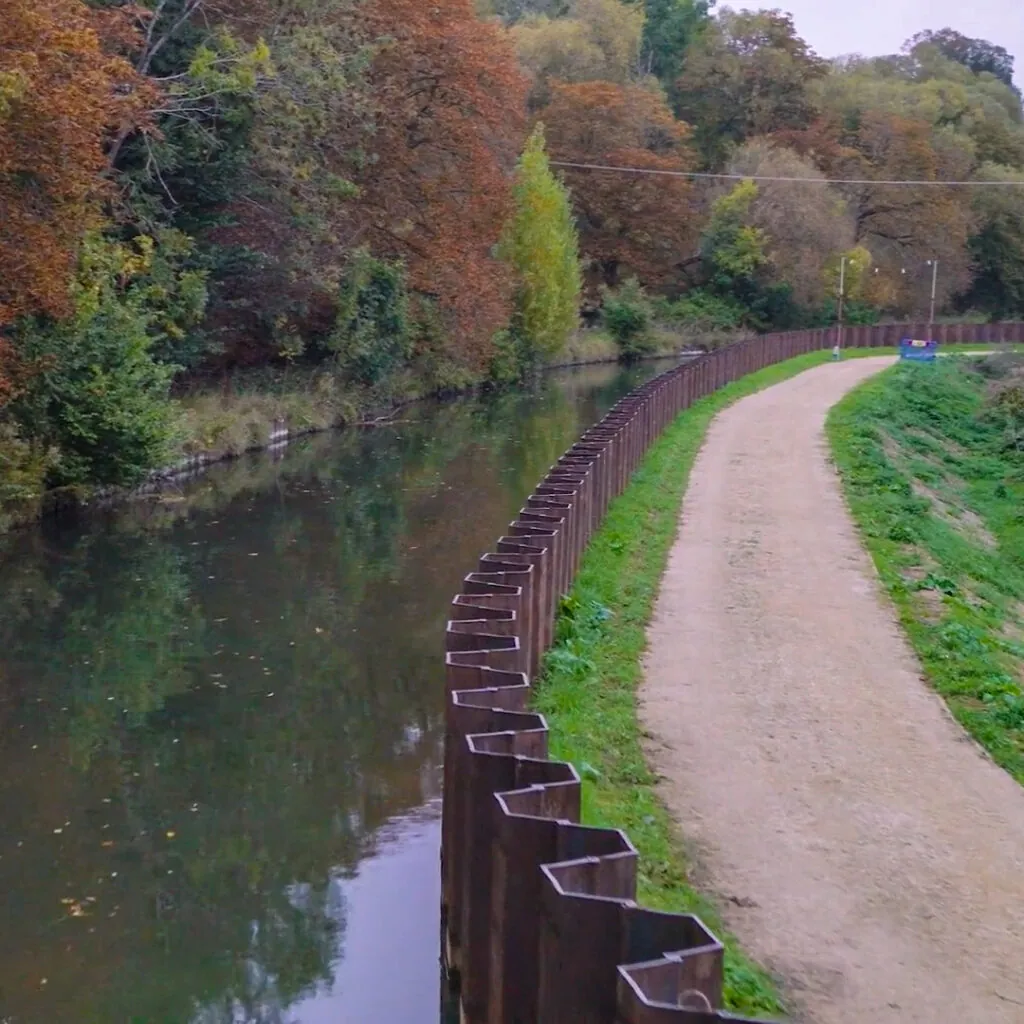
At a section in Waltham Cross, leakage had developed along the eastern bank of the watercourse. To resolve this and protect the integrity of the river, a 1.1km stretch required reinforcement through the installation of a new sheet pile retaining wall.
Working with principal contractor Barhale on the £8.1M scheme, Ivor King successfully delivered a piling solution focused on long-term asset resilience while maintaining the operational continuity of the river.
Complex Constraints, Smarter Solutions
From the outset, the project presented significant logistical and environmental challenges.
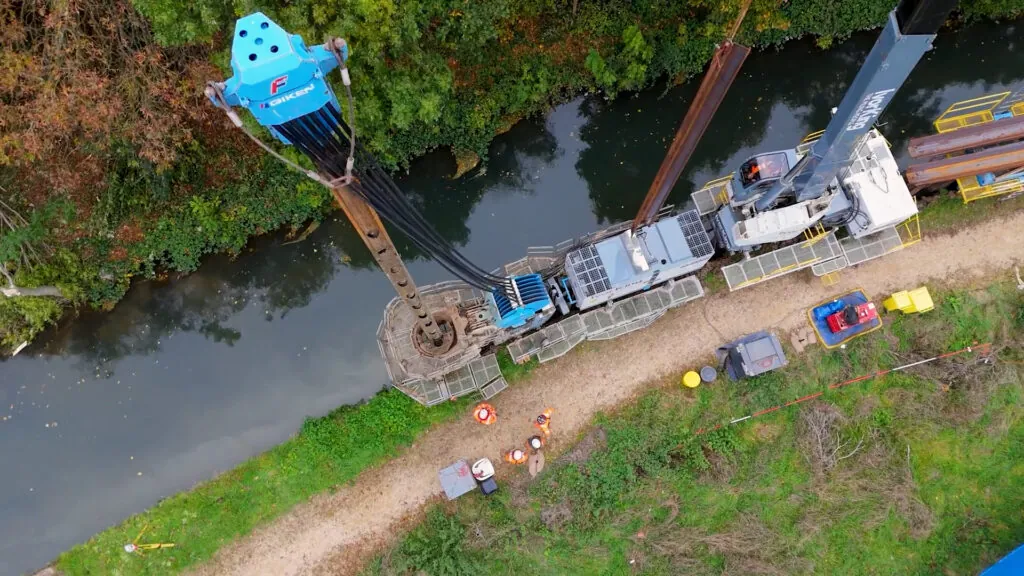
The narrow towpath could not support heavy plant, and access to the eastern bank was not possible. Site boundaries were highly restrictive, and the works needed to be carried out with minimal disruption to nearby communities and the surrounding ecosystem.
During the pre-construction phase, Ivor King worked closely with Barhale to develop a fully buildable methodology tailored to these constraints.
Choosing the Right Technology: The Giken GRB System
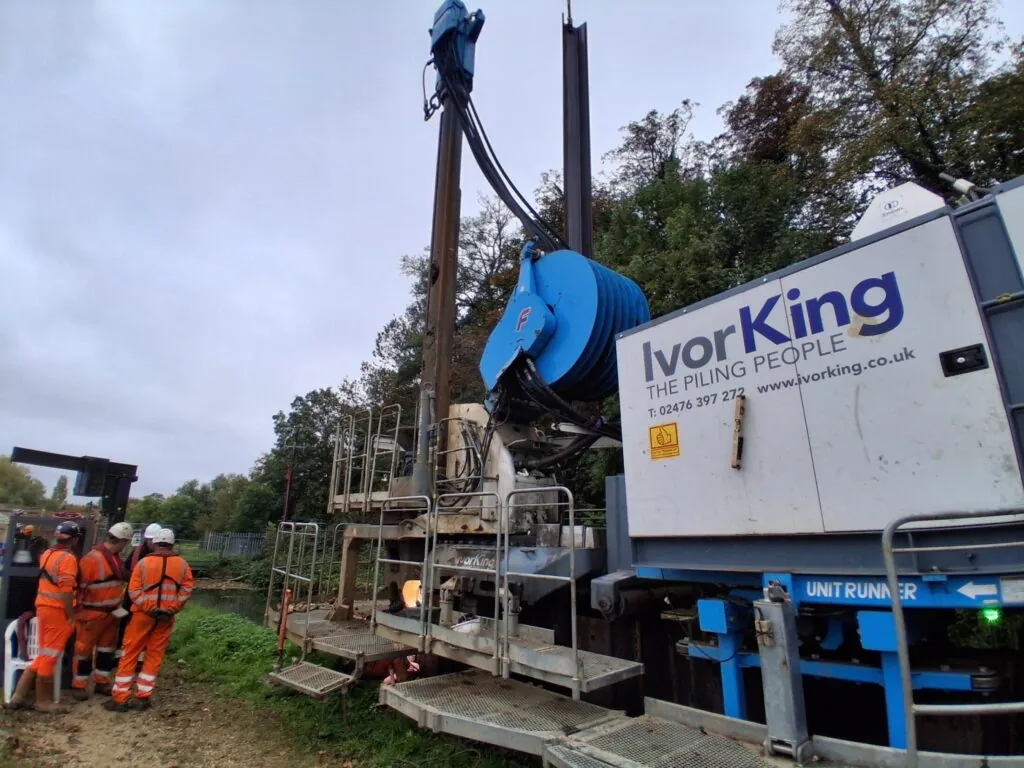
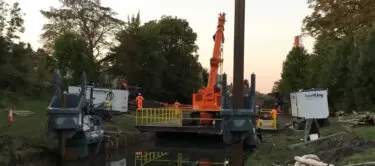
To overcome access limitations and environmental sensitivities, the Giken Reaction Base System (GRB) was selected.
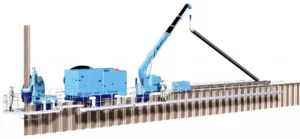
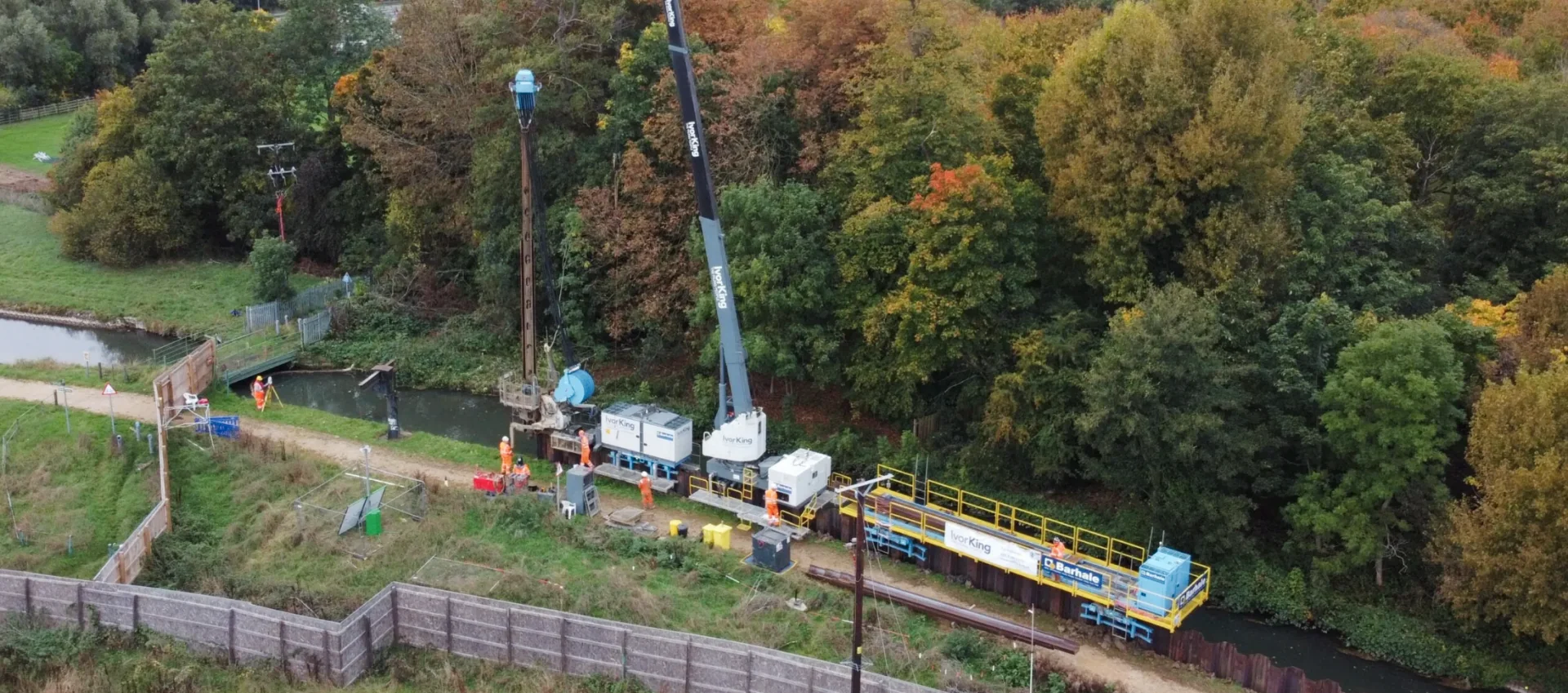
This state-of-the-art piling solution allows all equipment to operate directly from the installed sheet piles, eliminating the need for temporary platforms or additional land take. It is ideally suited to confined, over-water, or environmentally sensitive sites.
How the GRB System Works
The GRB process follows a precise, repeatable cycle:
- Sheet piles are first loaded onto a pile runner from the storage area
- The runner travels along previously installed piles to the installation zone
- A clamp crane lifts each pile and positions it into the Silent Piler
- The Silent Piler presses the pile into the ground using reaction force from previously installed piles
- Once complete, the entire system advances forward to continue the sequence
On this project, the Silent Piler operated in Supercrush mode, pre-augering challenging ground while pressing in piles simultaneously, enabling installation into the impermeable London Clay.
Minimising Environmental Impact
Given the ecological importance of the waterway, careful consideration was given to minimising environmental impact.
The vibration-free pressing method significantly reduced noise and disturbance. Additionally, a bubble curtain system was deployed to prevent the spread of silt within the water, protecting aquatic habitats throughout the works.
Delivering Results
In total, more than 1,800 steel sheet piles were successfully installed along the 1.1km stretch. Sustainable Eco-Sheet-Pile sections from ArcelorMittal were used, further supporting the project’s environmental objectives.
Through innovative piling techniques, Ivor King delivered a cost-effective and environmentally sensitive solution, eliminating leakage while preserving one of London’s oldest and most vital water assets.