GOT HERE Array ( [strictly_necessary] => Array ( ) [functional] => Array ( ) [performance_analytics] => Array ( [0] => Array ( [0] => Kuzsu [1] => [2] => ) ) [advertisement_targeting] => Array ( ) ) CFA & Bored Concrete Piling | Ivor King - The Piling People Skip to content

Scroll to continue

BORED Sq

Key Benefits & Advantages


Bored and CFA piles can provide a large load carrying capacity

Piles of variable lengths can be extended through soft, compressible, or swelling soils into suitable bearing material.

Low noise and virtually vibration-free installation

Absence of vibration ensures no disturbance to adjacent piles or structures

Less disruption to adjacent soil

Large excavations and subsequent backfill are minimised.

Where the bearing capacity of the upper soil is poor or imposed vertical loads are high, concrete piling foundations are required. For many design situations, bored piles can offer higher capacities with potentially better economies than driven piles.
Ivor King offer a range of Bored and CFA concrete piling services that integrate with our Sheet Piling solutions.

Bored Piling

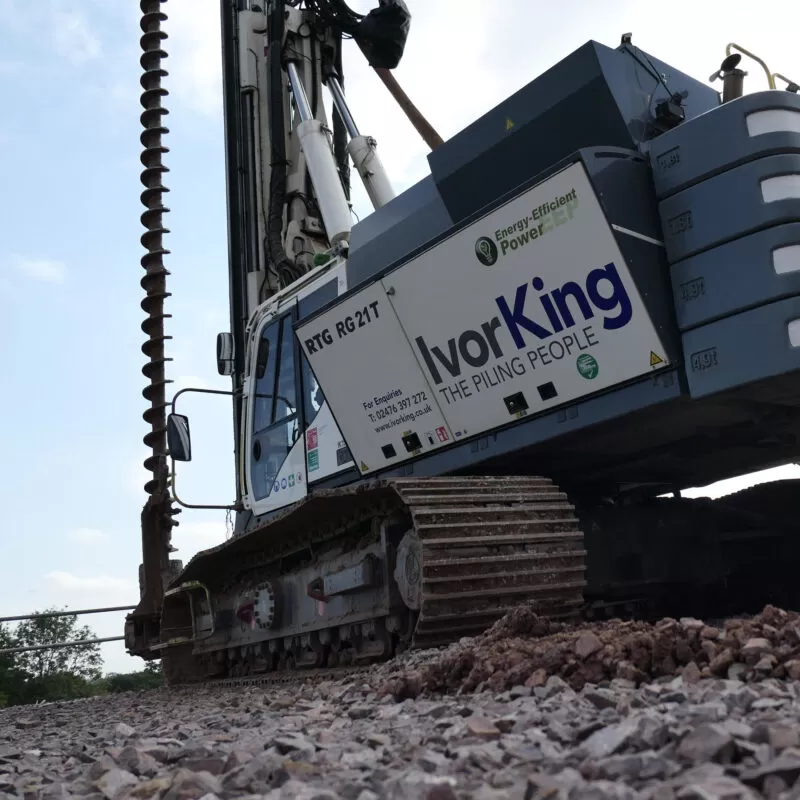
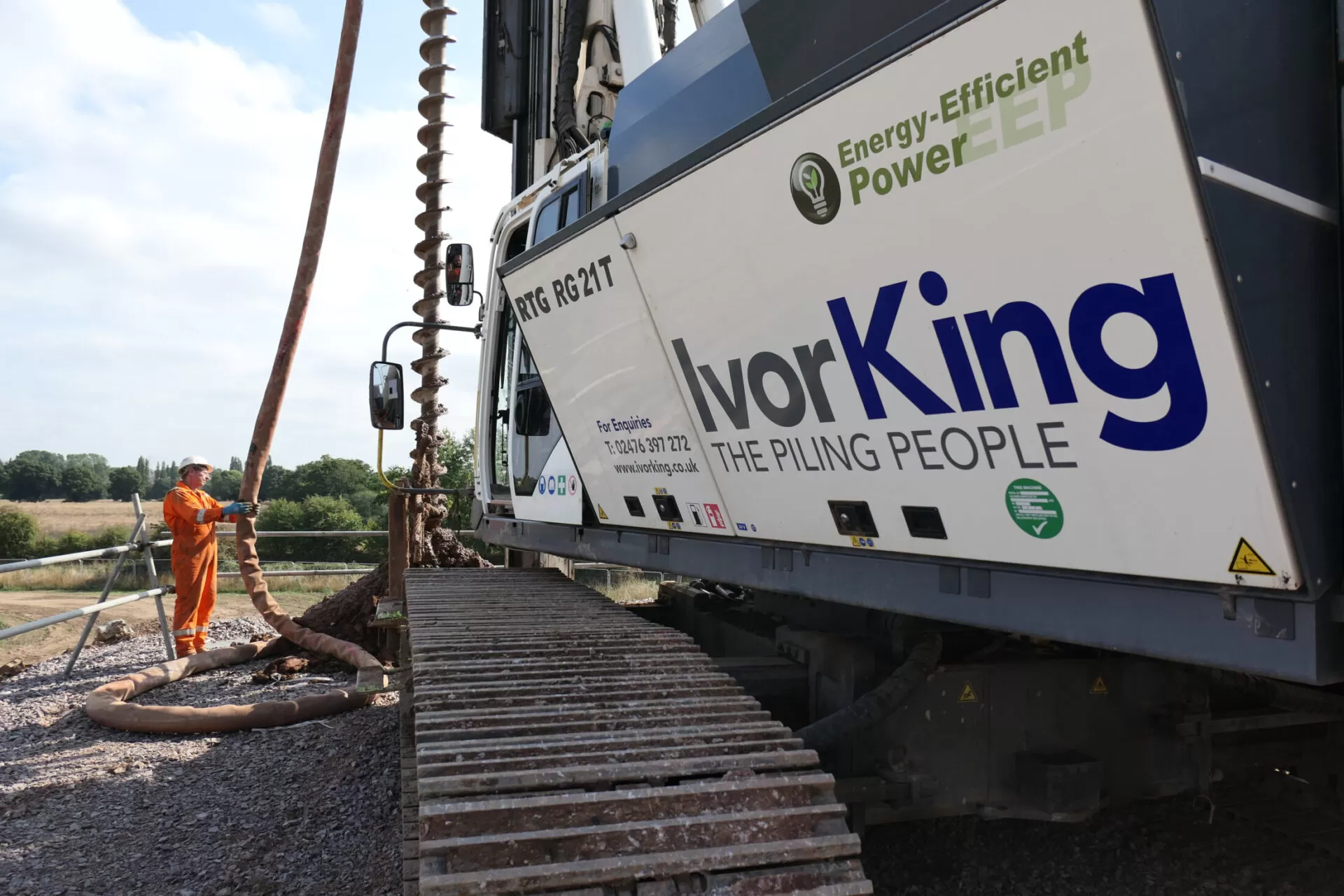
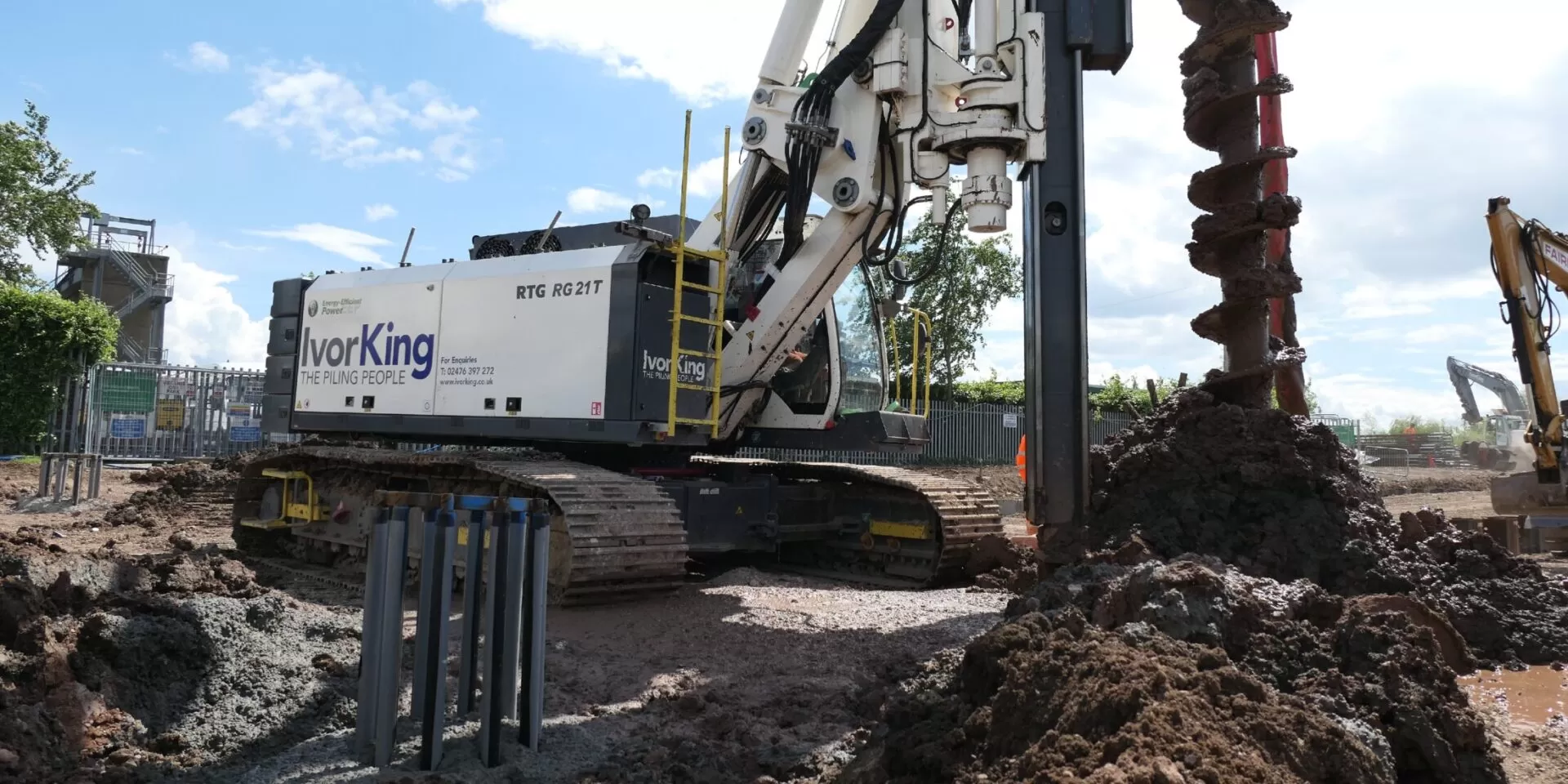
Our bored cast in-situ solution involves boring a circular hole into the ground, installing steel reinforcement cages and filling the borehole with concrete to form a pile. Boring is carried out to the designated depth by means of either a crane mounted or track mounted hydraulic drilling rig.

Apart from building foundations, the bored piling method is also used to form Contiguous and Secant bored pile walls for earth retention systems. A contiguous bored pile wall is formed by installing closely spaced bored piles, with a gap between adjacent piles of typically 75 to 150mm. A Secant pile wall is formed by installing overlapping bored piles. Secant piles are usually adopted where there are particular concerns about ground water.

CFA Piling

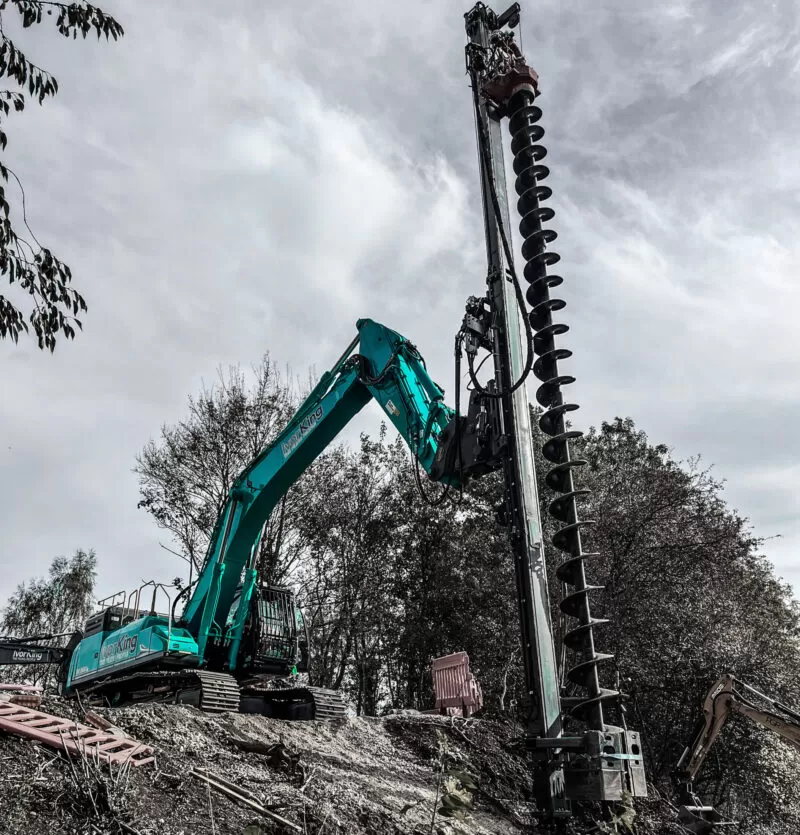
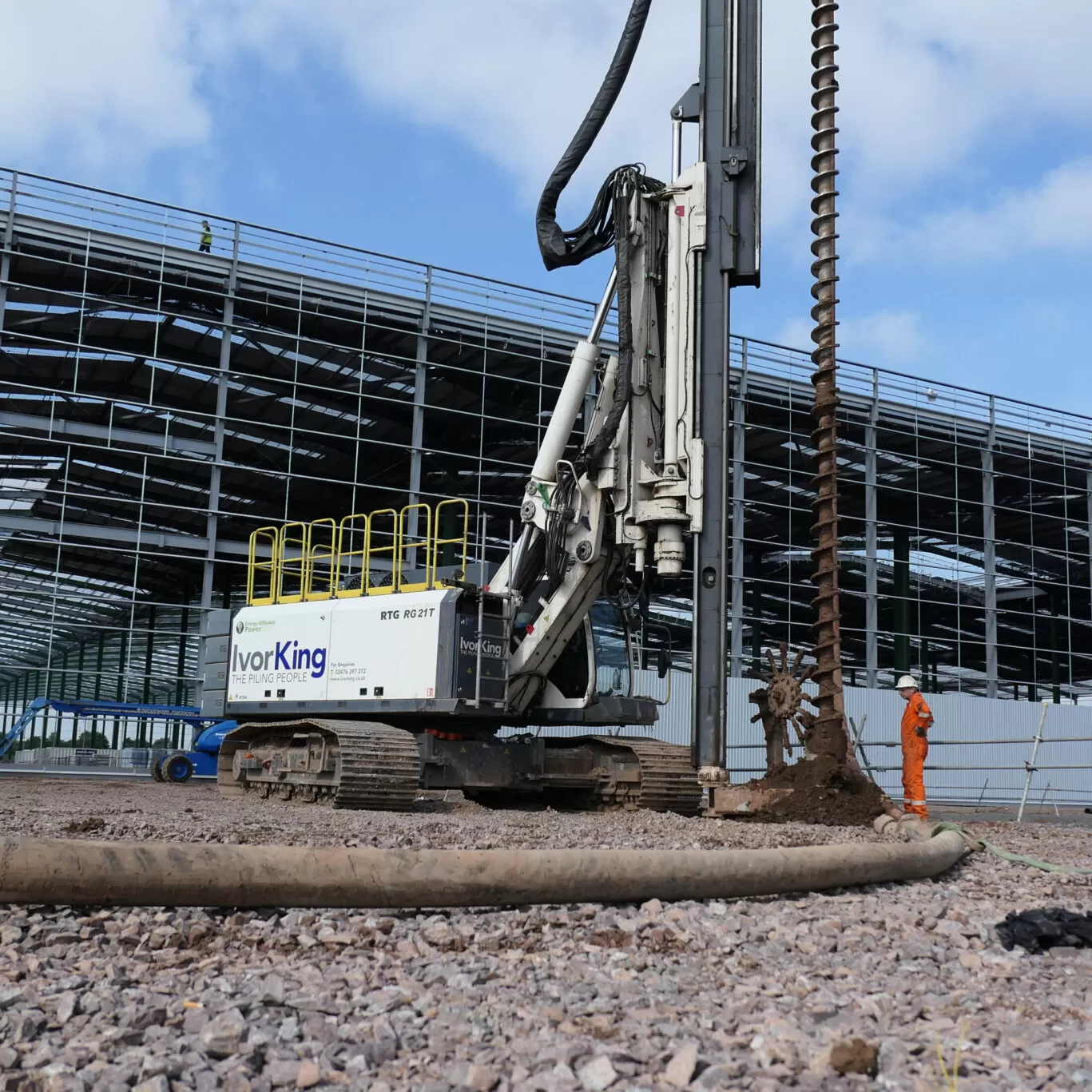
Our Continuous Flight Auger (CFA) piling technique is an economical cast in-situ process which is suited for wet and granular soil conditions. A full length auger is plunged into the ground to the required depth. Having a hollow stem, once the auger has drilled to the required depth, concrete is pumped under pressure into the ground. A pre-fabricated reinforcement cage is then forced into the concrete before setting occurs.

Temporary and permanent bored pile walls can be constructed using the CFA technique. They can be designed to function as a simple or propped cantilever and to support vertical loads.
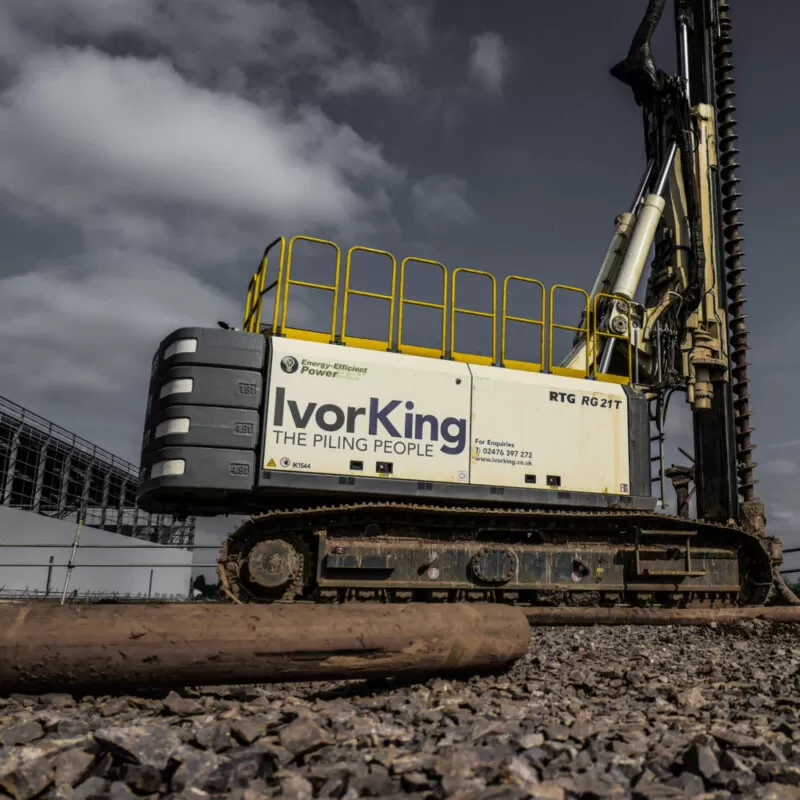
Plant Equipment Our Bored & CFA Concrete Piling Equipment and Rig Specification Guide

Did you know we also offer Construction Training?

We run a wide and varied range of CPCS and NPORS accredited training and assessment courses, geared towards working in the construction sector

Training solutions
Piling solutions

What is the difference between bored and CFA pile installation? caret-down

For a conventional bored pile, a rig drills a hole before reinforcement and concrete are placed in the bore. Continuous Flight Auger (CFA) piling uses a hollow-stem auger to drill to depth, then pumps concrete through the stem as the auger is withdrawn. The reinforcement cage is inserted into the fresh concrete. Ground conditions and the pile design determine the appropriate method.

How is the right bored or CFA piling rig selected? caret-down

Rig selection depends on the required pile diameters and depths, the ground profile and the space available on site. Access, headroom and the working platform also affect the choice. Ivor King reviews these requirements alongside the installation method, so the rig and supporting equipment suit both the foundation design and the practical conditions on site.

Are bored and CFA piling suitable near existing buildings? caret-down

Bored and CFA piles are formed by drilling and placing concrete, which generally produces less installation vibration than hammer-driven piling. This can make them useful near existing buildings, but the rig, concrete deliveries and other site activities still create noise. Nearby foundations, buried services and ground movement risks need to be considered when planning the work.

Do bored and CFA piles produce excavated spoil? caret-down

Yes. These methods remove soil during drilling, so the site needs arrangements for collecting, handling and disposing of the spoil. The quantity and disposal requirements depend on the pile dimensions and ground conditions. Access for spoil removal and concrete deliveries should be planned alongside the rig’s working area to keep installation running efficiently.

Can bored and CFA equipment be used to construct retaining walls? caret-down

Yes. Bored piling can form contiguous walls with gaps between adjacent piles, or secant walls with overlapping piles. CFA techniques can also be used for suitable bored pile wall designs. The wall arrangement depends on the retained ground, groundwater conditions, loads and support requirements. Secant walls are often considered where groundwater control is a particular concern.

What information helps Ivor King plan bored or CFA piling works? caret-down

Useful information includes the ground investigation, foundation or retaining wall drawings, pile sizes, required depths and design loads. Details of site access, headroom, existing structures, buried services and the construction programme also help. Share any restrictions on deliveries, spoil removal or working hours so they can be considered when planning the equipment and installation sequence.